How to Stay Warm During a Colorado Winter Elopement
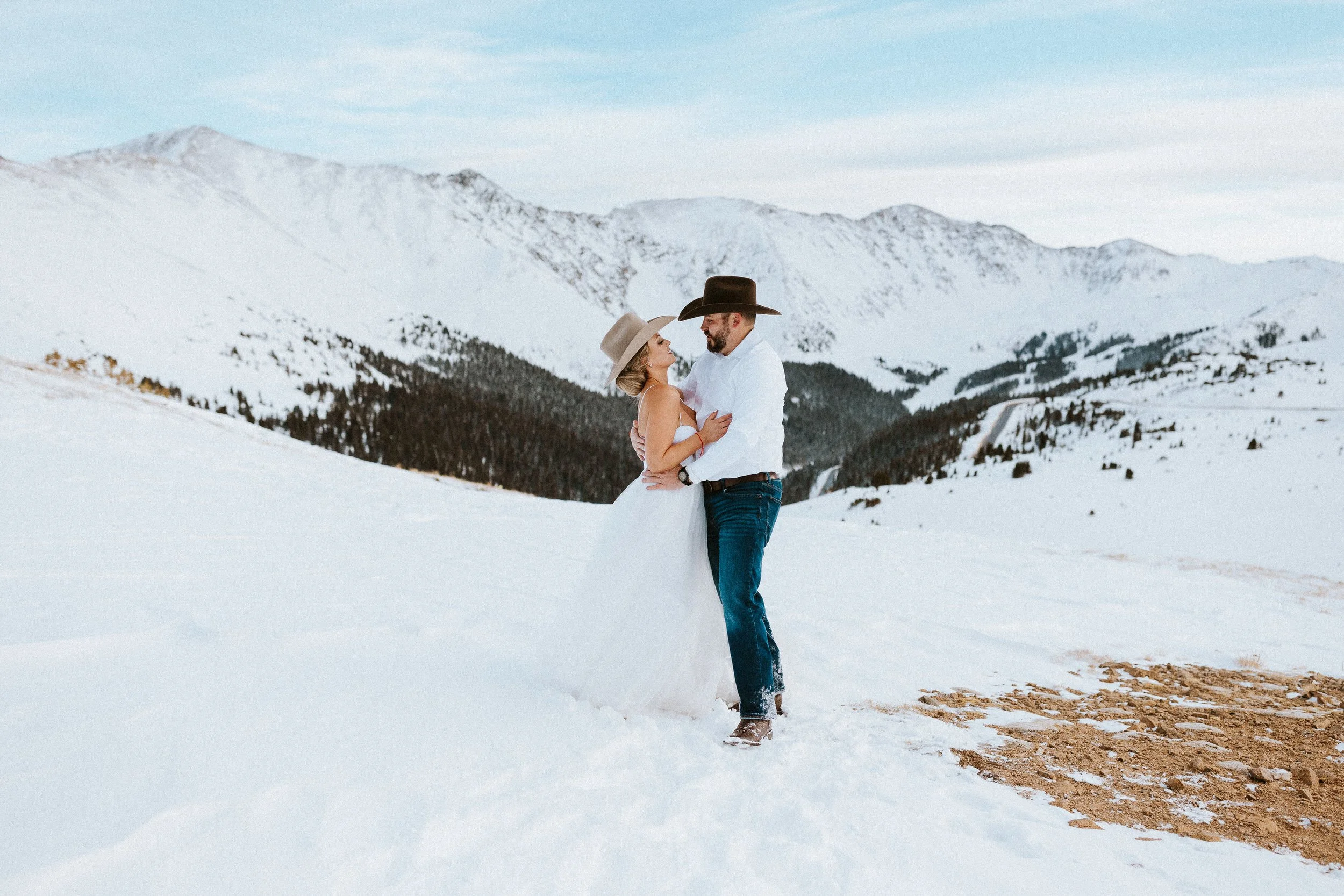
Okay, I’ll admit that I used to hate photographing weddings in the winter. Give me a 90 degree day over trudging through fresh snow in 20 degree weather any day. And I still haven’t figured out how to layer for winter hiking so trust me, I get it.
But! Winter in Colorado has a few things going for it. The mountains are covered in snow, there are way fewer people around, there are no afternoon thunderstorms to plan around, and the sun sets at 4:30 pm so you get to crawl into bed early. And since snow sticks around out here for something like eight months of the year, skipping winter isn’t really an option.
That’s when it comes down to preparing for the cold. Nobody wants to be sweaty in their wedding clothes from too many layers but still freezing because they forgot gloves. So here’s what I’d wear, pack, and plan so you stay warm the whole day.
Still planning the rest of the day? Start with how to plan a Colorado winter elopement.
How cold is a Colorado winter elopement?
The coldest elopement I’ve ever photographed in Colorado was in May. Yep, May. We get one last big snowstorm around Mother’s Day almost every year (literally it’s happened like 10 out of the 13 years I’ve lived here).
Otherwise, I’ve somehow managed to avoid photographing a winter elopement on one of those absolutely miserable 10 degree days. But they do happen!
Most of the time though, Colorado winters are surprisingly mild, especially when the sun is out. You can be standing in the snow feeling warm and comfy, but then a cloud rolls in or the wind picks up and suddenly you’re freezing.
So how cold will it actually be on your wedding day? I genuinely couldn’t tell you months in advance. That’s why we start keeping an eye on the forecast as your date gets closer, and why we’ll always plan for cold weather regardless. That way, if we do get a sunny 50 degree day, even better.
If you want actual average temperatures by month, I've got a breakdown in my Colorado winter elopement planning guide.
Onto the tips!


Bring a coat you’re okay being photographed in
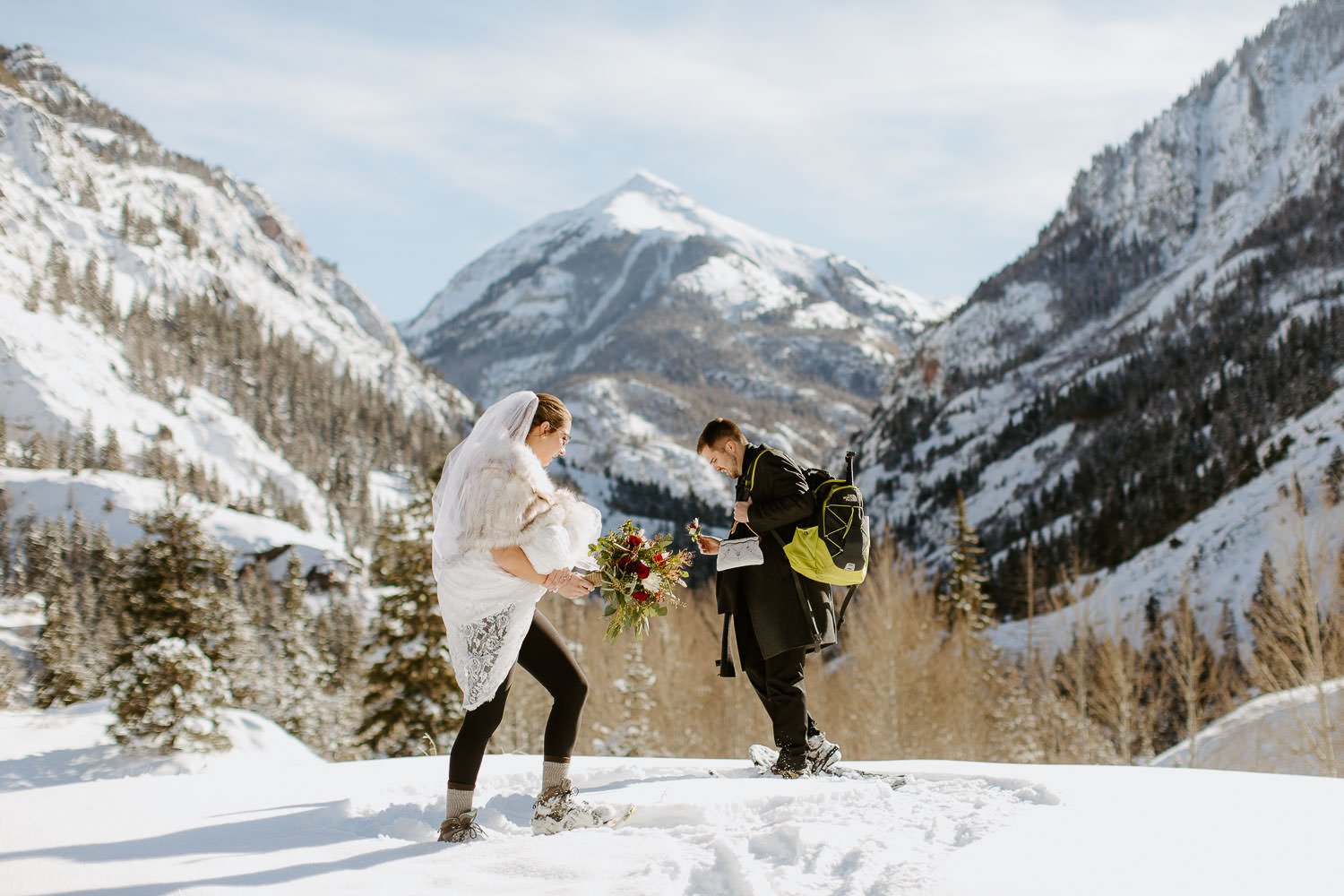
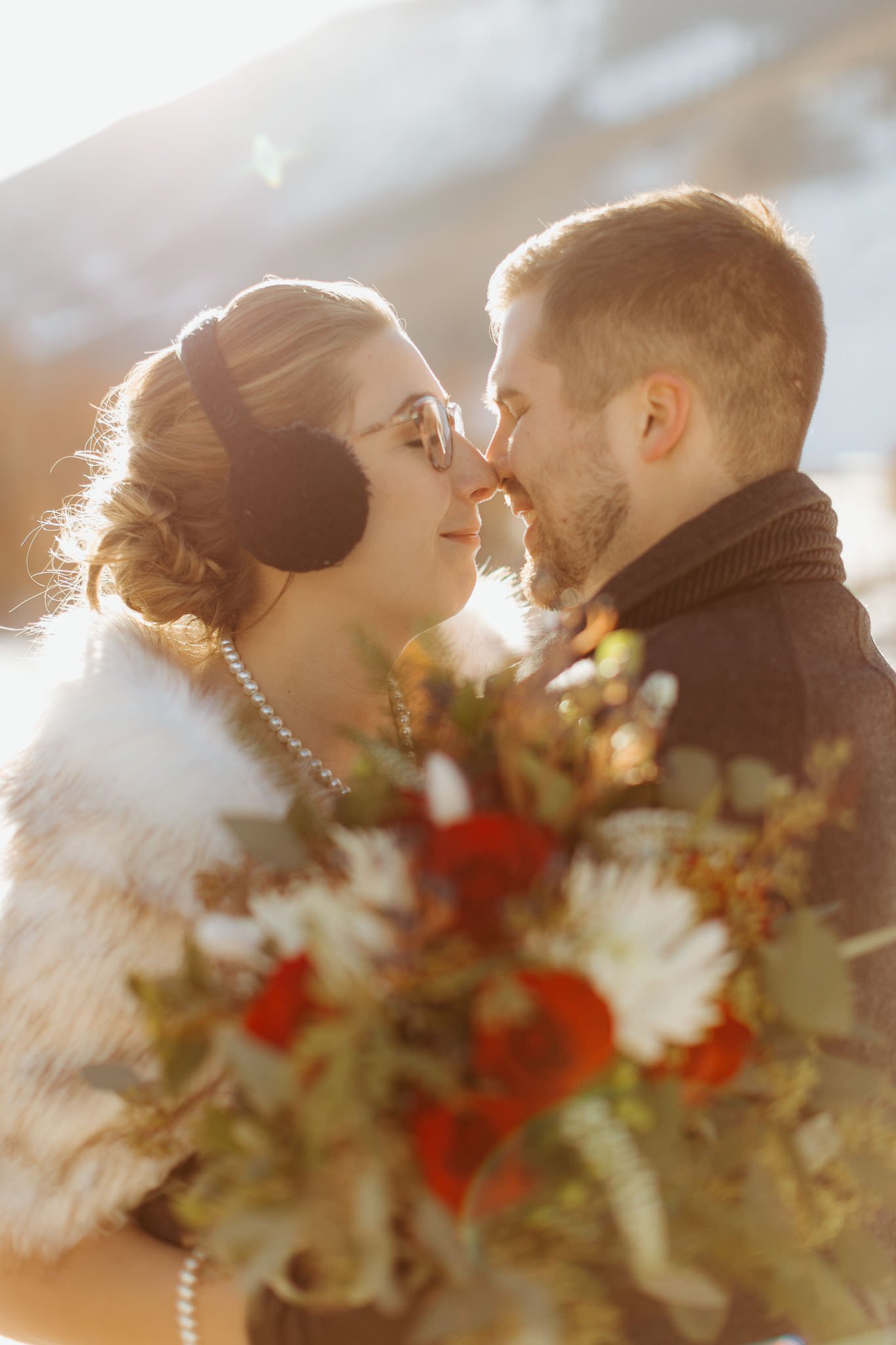
Like a lot of photographers, I shoot candid, so your coat is going to end up in your photos. There isn’t a point in the day where everyone takes off their jackets and we start “doing photos.” So pick a coat you like the look of, plus whatever hat or gloves you’re wearing, and plan on keeping them on.
If everything in your closet is a beat up hiking jacket (same), go thrifting. You can find long wool coats for $10 and they usually fits the “wedding day” vibe that most people go for in their photos. But there’s also nothing wrong with that beat up Patagonia jacket covered in gear tape.
You’re welcome to borrow one of my own jackets too! Because I have a bit of a thrifting problem…I’ve got a ton of cute vintage Pendleton jackets and capes, leather fringe jackets, the list goes on. Just let me know before your date so that I can bring them.
What to wear under your wedding dress or suit
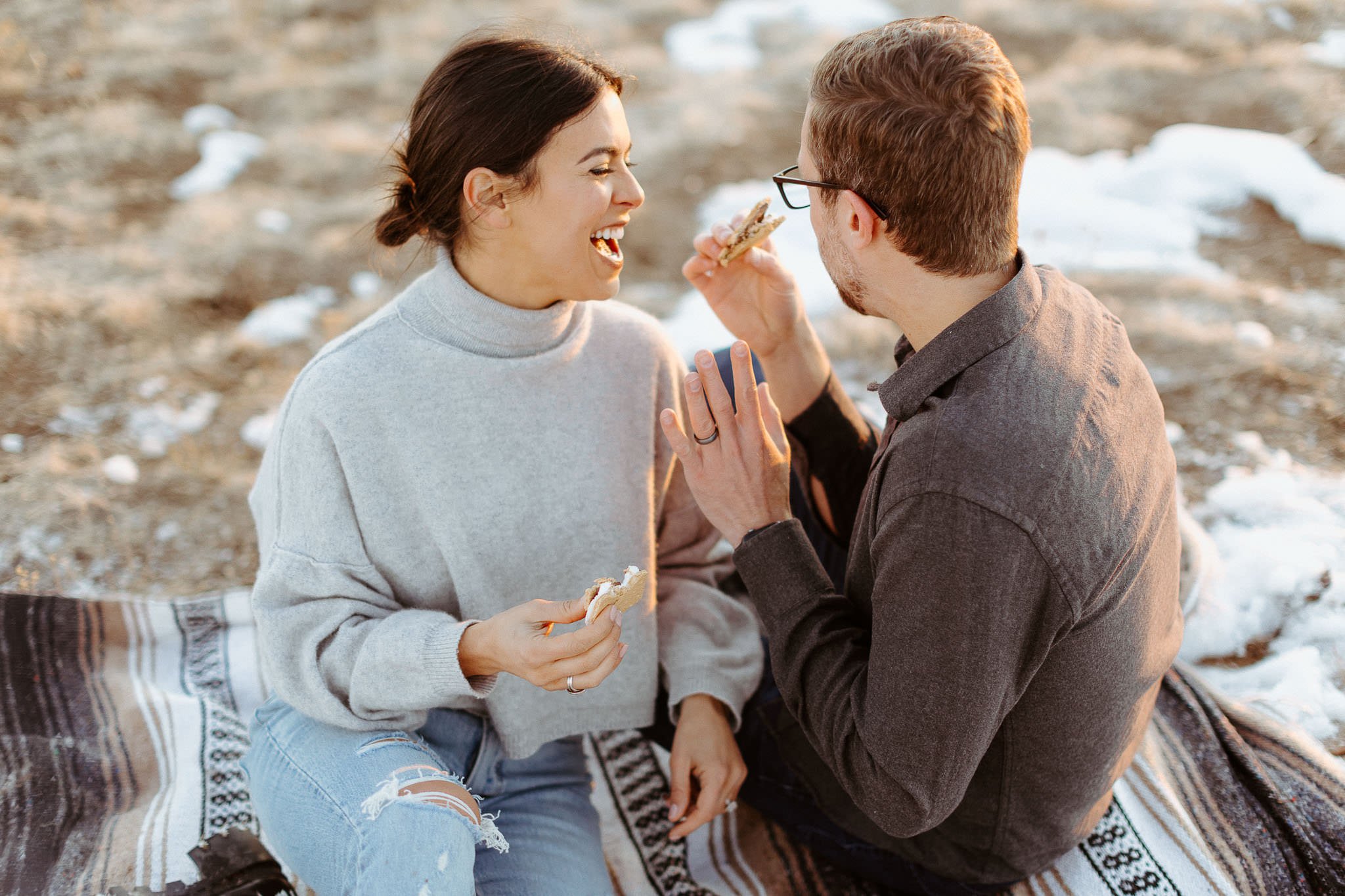
Base layers! They have come suchhhhh a long way since the 90’s and 2000s and are now thin enough that they don’t bunch up and add bulk under your clothing. Smartwool and Patagonia both make nice thin ones and you can usually find them discounted at places like Sierra.
A quick breakdown on base layers because there are some things to know:
Weight: Go with midweight for a winter elopement in Colorado. Base layers come in lightweight, midweight, and heavyweight, and the right one depends on the temperature, how active you are, and personal preference.
Fabric: The two most common are merino wool and synthetics (or a blend of the two).
Merino is warmer, more breathable, and odor resistant, but it’s pricier and less durable. Also, if “wool” makes you think of a scratchy sweater, merino isn’t that. The fibers are much finer, so they bend against your skin instead of poking it. I’ve never had Smartwool feel itchy. But also make sure you wear it for extended periods of time before your actual wedding day so you can double check!
Synthetic (usually polyester) is cheaper and more durable, but not as warm or breathable.
If you’re wearing a dress, skin colored fleece lined leggings are the first thing I recommend because they don’t show under most dresses. Wool leggings work too, andddd if your neckline allows it, a thin long sleeve base layer up top helps SO much.
If you’re wearing a suit, wear a base layer top and bottom under your shirt and pants. And if you’re still shopping, wool and tweed suits are a lot warmer fabric choices!

How to keep your feet warm
In the winter my feet are CONSTANTLY cold. Even at home. So the trick is to not let your feet get cold in the first place. If they’re cold going into your boots, they’re gonna stay cold.
One of my favorite tried and true tricks is to wear one pair of socks and shoes on the way to wherever we’re meeting. Keep your boots up with you in the cab of your car, not in the trunk where it’s cold. Then, once you arrive, swap your socks and shoes. If your feet are warm but not sweaty, you can keep the socks the same, but if they got too hot and are sweaty, change those suckers.
Socks come in merino wool too, and one good pair is usually plenty. I’m a big fan of the brand Darn Tough. And I know doubling up on socks sounds like it’d be warmer, but if it makes your boots tight, the socks get squished and cut off circulation to your toes, which actually makes your feet colder.
If it’s especially cold, or we’ll be standing still on snow for a ceremony for a while, a thin sock under your wool ones can help, since it pulls sweat off your skin and the wool keeps you warm. Just make sure your toes still have room to move. Either way, always bring a spare pair in case your feet get too hot and start sweating. That’s how they start getting cold!
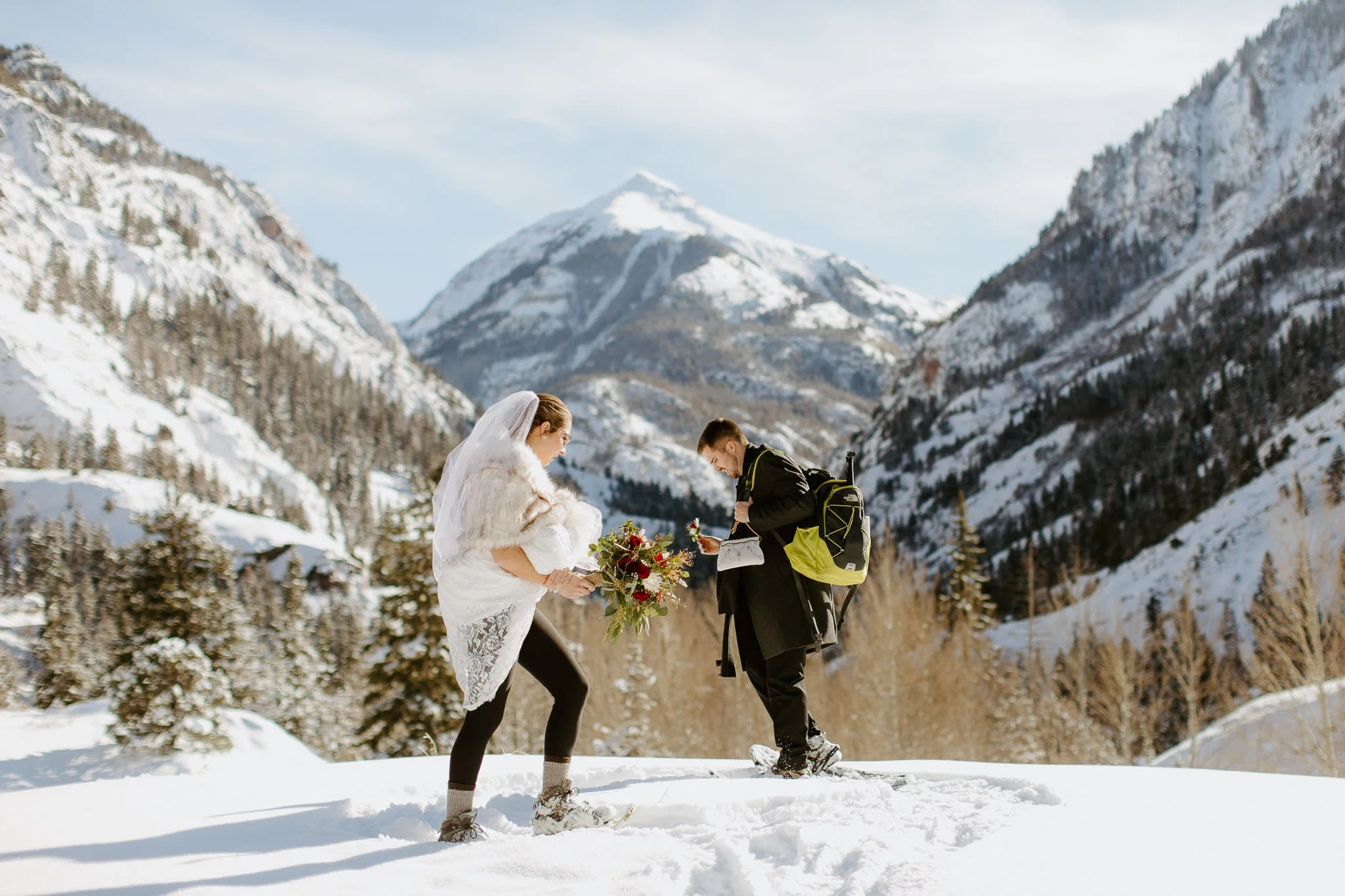
For shoes, waterproof is the biggest deal. You’ll likely be standing on snow, possibly walking through it if someone else hasn’t broken trail yet. Taller boots will keep the snow from getting inside and insulated insoles are a great upgrade. I’ve got my favorite boots in my wedding dress post. If you want nicer shoes for a few photos, keep them in the car and swap them in for just those shots.
And if we’re going anywhere icy, I’ll bring microspikes!

Hand warmers, toe warmers, and where to put them
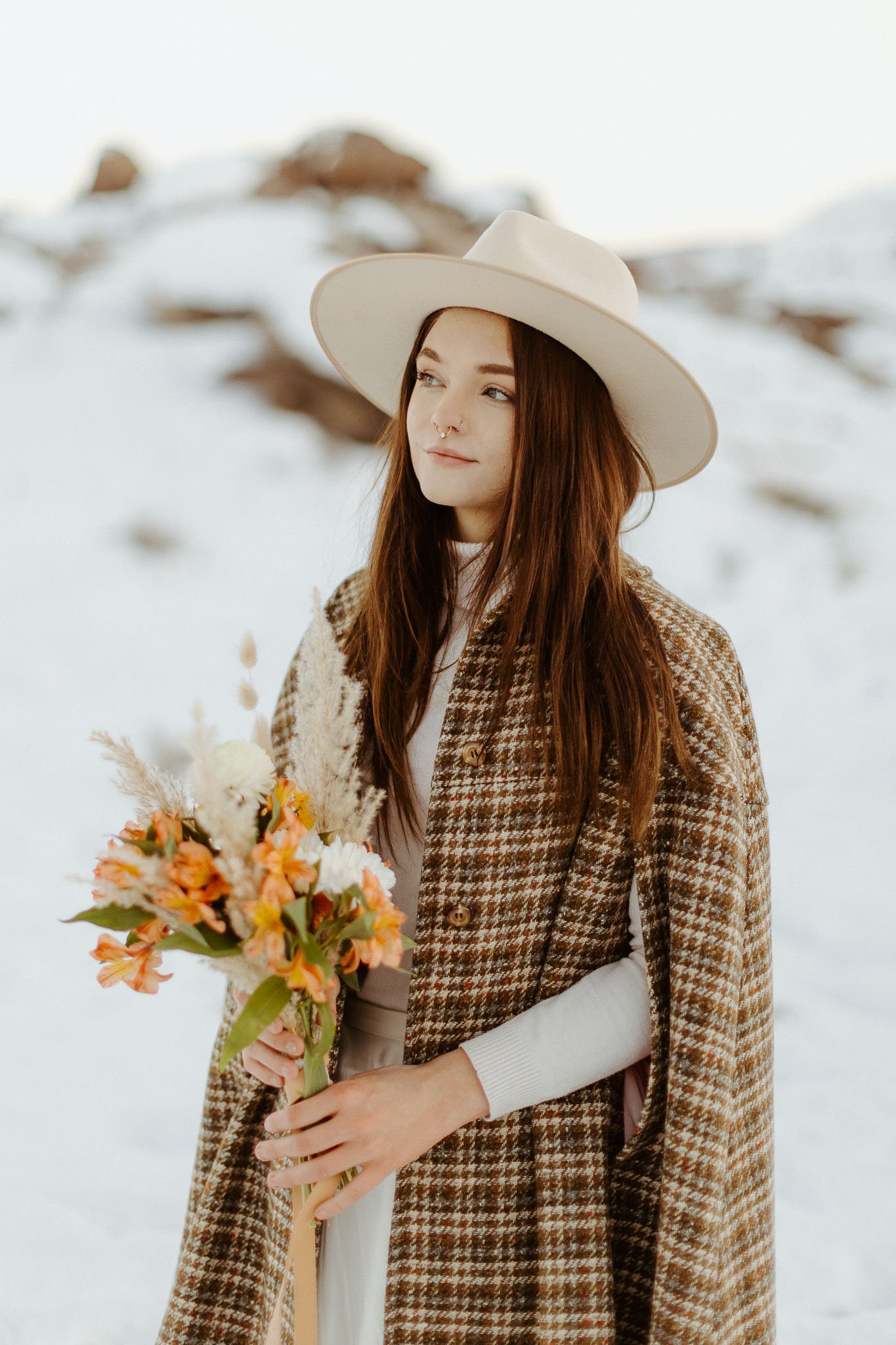
HotHands are a godsend and I always have some in my car. They make them for hands, toes, and your whole body now. If you’d rather skip the single use kind, rechargeable hand warmers work too and can be picked up at most local gear shops.
As for where to put them: literally everywhere you get cold. Depending on the temperature and what I’m walking on (snow vs concrete), I put the tiny ones over my toes inside of my boots because that’s what gets coldest for me. The ones that line the bottom of your foot are great too, since you lose a lot of heat through the bottom of your shoes when you’re standing on snow.
Otherwise, shove those things in pockets, in the flaps of your gloves if you have them, and in your underwear if your butt gets cold like mine (lol).
If you’re wondering what to do with gloves during your ceremony, that’s totally up to you but just remember that once your fingers and hands are cold, it’ll be hard to get them warmed back up. Fingerless gloves are cute AF and you can wear them for the entire ceremony.
Bring a blanket (or two)
Pendleton wool blankets and Rumpl puffy blankets are my favorites. I love Pendleton’s colors and patterns because they add something to your photos, and wool is great in the snow because it keeps you warm even when it gets a little damp. Rumpls are warm AF, but if it’s windy, that thing turns into a sail and tries to fly away, so on a windy day a wool blanket is the safer bet.
One or two blankets is plenty: one to sit on and one to wrap up in. Most of the time we sit on them, like when you’re having something warm to drink. They’re also a good spot to set your stuff so it doesn’t end up in the snow.
If you’re sitting for a while, like reading letters from loved ones or hanging out in front of a fireplace, wrap one around you too. And if you’re bringing guests, having something for them to wrap around themselves helps a lot.
I can bring blankets, I just don’t usually, so let me know ahead of time if you want me to!
What To Wear On Your Feet (This Is The One People Get Wrong)
Cold feet ruin days faster than almost anything else. Here's the system:
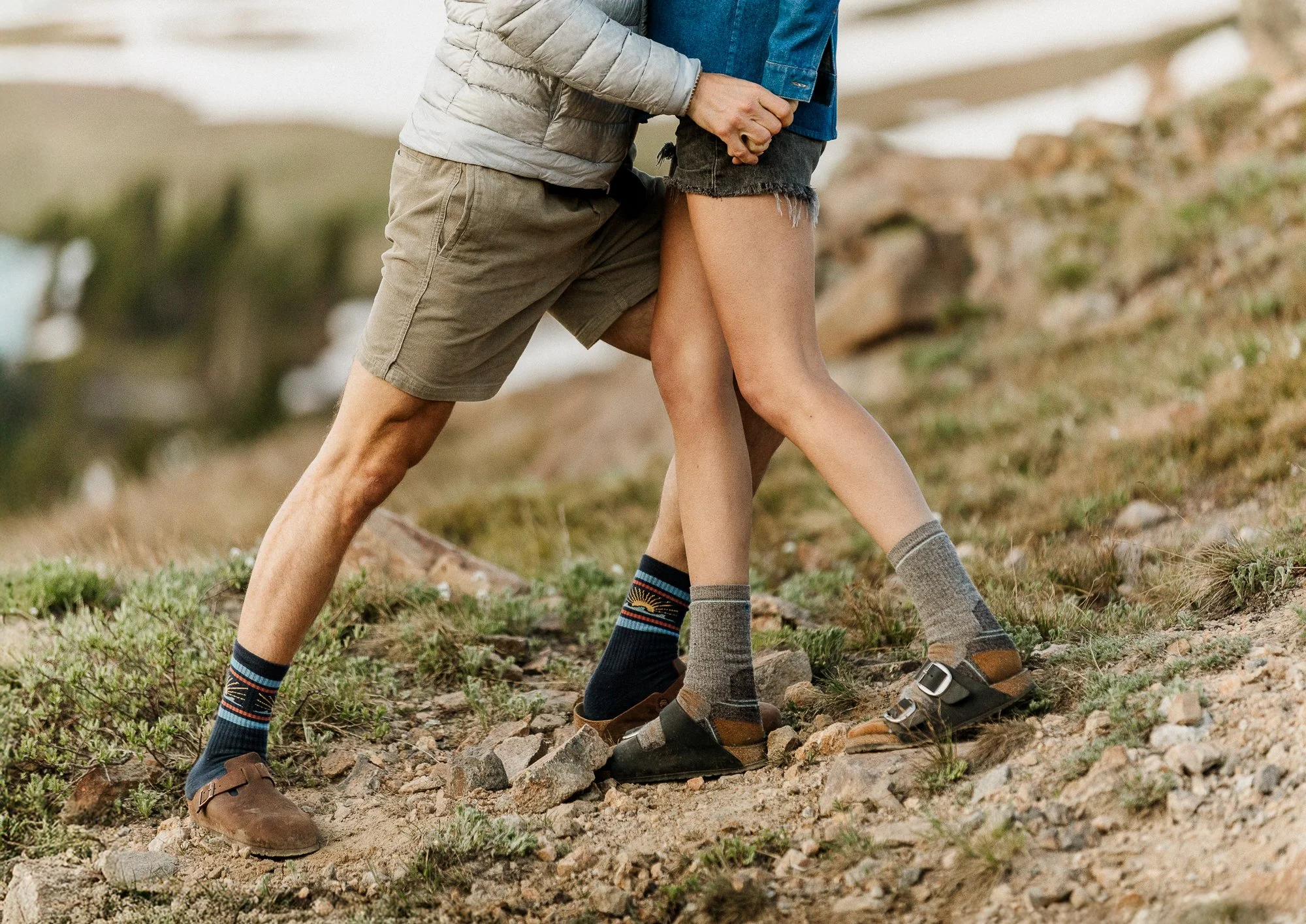
Start with a thin moisture-wicking sock, then a thicker wool sock on top. Change your socks right before we start shooting — if your feet sweated on the drive up, you're starting cold. This is a mistake I still have to remind myself about every winter.
Your boots need to be waterproof. Not water resistant. Waterproof. If you're not sure, assume they're not and plan accordingly. Insulated boot insoles are a cheap upgrade with a noticeable payoff at altitude. And wear two pairs of socks throughout the day, swapping when needed.
If you want to wear nicer shoes for a few shots, keep them in the car and swap in just for those moments. Nobody needs to hike through snow in wedding shoes to get to the ceremony spot.

Have Warm Drinks Between Locations
Car warm ups between spots are mandatory in winter. Non negotiable.
I personally love to level it up with something hot like coffee, hot cocoa, or, who are we kidding, a hot toddy in a Yeti (optional but strongly recommended.)
If you want something warm at the session and couldn't prep ahead of time, let me know before the day. I can usually make it happen from the car. I keep a lot of things in that car.


Campfire as a Ceremony Setup (Not Just a Warmup)
This one requires a little planning depending on where we're shooting, but if it's an option? Always yes.
There's something about ending a winter elopement huddled in blankets in front of a fire with hot drinks in hand that just closes the loop perfectly. The photos are always some of my favorites. You're actually warm. Your clothes are going to smell like smoke for two weeks.
Worth it.

Keep Moving: Why My Prompts Help You Stay Warm
I give movement prompts constantly anyway. Walking, dipping, running toward each other, spinning. And in winter this is extra useful because standing completely still in the cold is how you get miserable fast.
When you're moving, your core heats up, your feet stay better insulated because you're not just standing on frozen ground. A 35 degree day starts to feel like 50 when you're actually moving around in it. Honest.

End Your Day at a Colorado Hot Spring
This is Colorado, which means a hot spring is usually within reasonable driving distance of wherever we're shooting. (Unless you're on the Eastern Plains. Then I genuinely cannot help you.)
The San Juans especially have great options close to popular elopement areas. If you're planning around Ouray, Silverton, or the broader San Juan Mountains, hot springs are basically built into the day. Booking on a weekday gives you much better odds of having the place to yourself.
Going from cold air into hot water after your wedding day is one of those experiences that's hard to explain until you've done it. Just trust me on this one.


Bring a Tent or Hammock for a Cozy In-Between Spot
Okay this one sounds unhinged. Hear me out.
A tent with the rainfly on is genuinely warm inside. And the photos of couples curled up in a hammock or peeking out of a tent opening in a snowfield are some of my all-time favorites. It's a prop AND a heating solution. That is called efficiency.
Here's the thing about winter elopements: most couples who do them are shocked by how much they enjoyed it. The cold is real. So is having the mountain entirely to yourselves. So is the way snow makes light do things it doesn't do any other time of year. So is getting in the car afterward, cranking the heat, and eating brie with your cheeks still pink.
Planning your winter elopement and figuring out the logistics? Check out the full Colorado elopement guide for everything from permits to timelines.
And if you want a Colorado elopement package that handles the planning side so you can just show up and get married — that's an option too.