
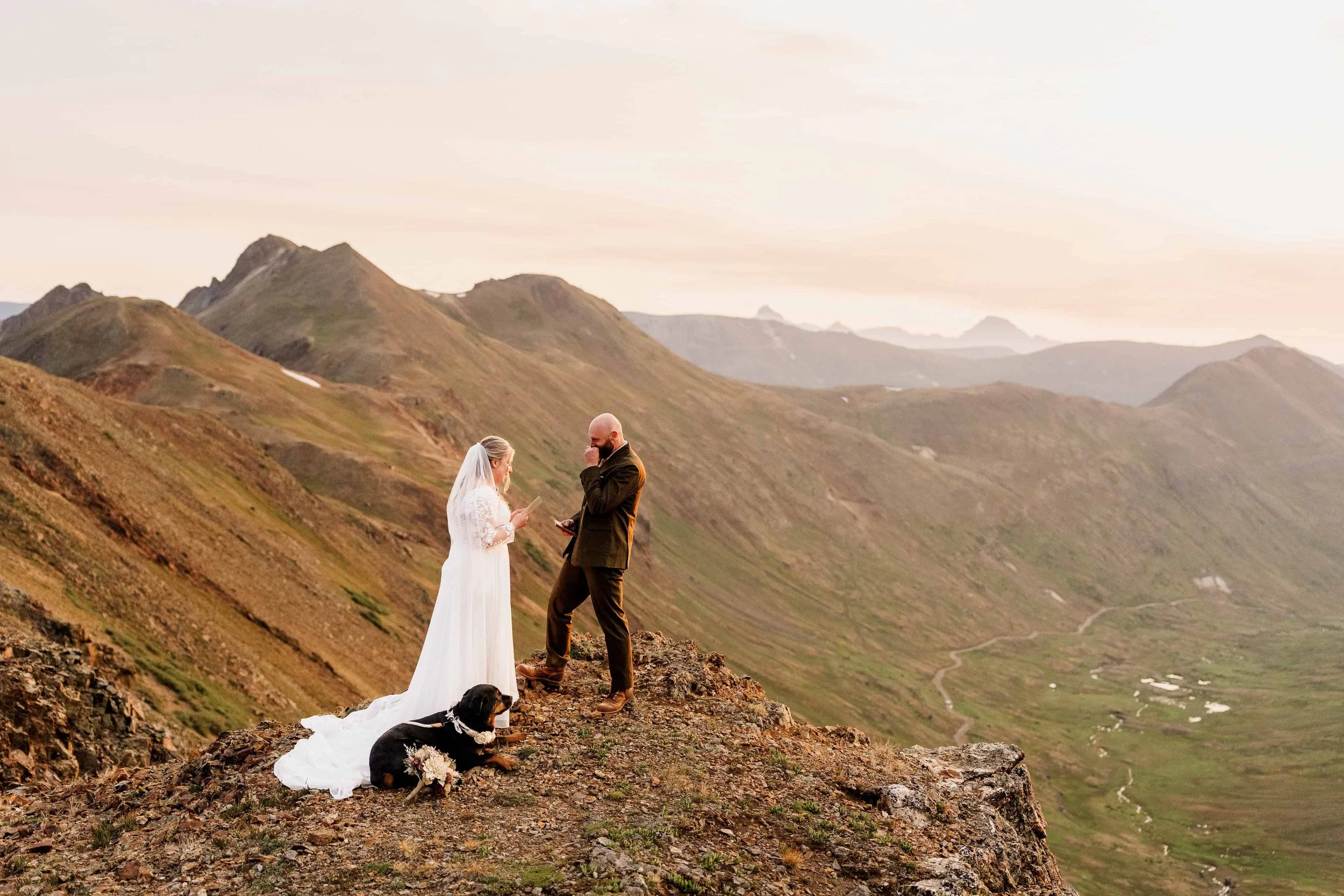
How to Elope in Colorado
Locations, Permits, and the Whole Plan.
So you have 40 browser tabs open...
One says you need a permit. One says you don't. One is a forum post from 2016. One is a ranger district page that has not been touched in a decade and is still wrong.
Meanwhile you're trying to work out whether the aspen leaves will still be there the second week of October. Spoiler alert! Nobody can tell you that. Not even me. But I can tell you which week to bet on, and exactly what we do when a wind storm rolls through and wipes them all out a week before.
Here's your actual problem. Colorado is not hard to elope in. It might be the easiest state in the country to do it. The problem is that you get one morning, and there are roughly a thousand places that morning could happen.
You're not choosing from a thousand places. You're choosing from about six that fit the day you want.
And not all of them are an 8 mile hike into the backcountry. Some of you do not want to sweat in your wedding clothes and same. That's the reason this page exists.
If you're still bouncing between a few ideas here's a full breakdown of the best places to elope in Colorado.
You Can Legally Marry Yourselves
Colorado is one of the only states where you can get legally married with no officiant and no witnesses. It's got a fancy name called "self-solemnization" so your ceremony can be just the two of you. And it is fully, boringly legal.
- 58 very tall mountains
- 300 days of sunshine
- The loosest marriage laws in the country
No permit for most of it
Most Colorado elopements happen on National Forest or BLM land. A small ceremony with no arch, no chairs, and nothing blocking a trail typically doesn't need a special use permit. Keep it small, follow Leave No Trace, and you can usually skip the paperwork.
Rocky Mountain National Park and a few state parks are the main exceptions. Full breakdown in section 06.
You don't have to earn the view
I love hiking. I do not love hiking when I have to feel pretty and be photographed.
Colorado has alpine lakes you can drive to. 4WD roads that put you above treeline. Mountain pass pull offs with views that outperform a lot of trails in the state.
If you want to hike on your elopement day, great! If you don't, also great! The mountains don't care either way and neither do I. (Unless you do want the ten mile hike. In that case, I know photographers who would love that. I'm not one of them.)
The scenery is genuinely unhinged
I've been doing this for ten years and the scenery still gets me. Not in a professional, "check my composition" way. In a "are you freaking kidding me" way.
That's Colorado. And you get to say your vows in it.
Any time of year works
Snowy peaks and frozen lakes in winter, when basically nobody else is out there. Wildflowers low in spring and stupid high in summer. Long light through July and August. Every shade of orange in fall, for about eleven days. That one is a "blink and you miss it" situation.
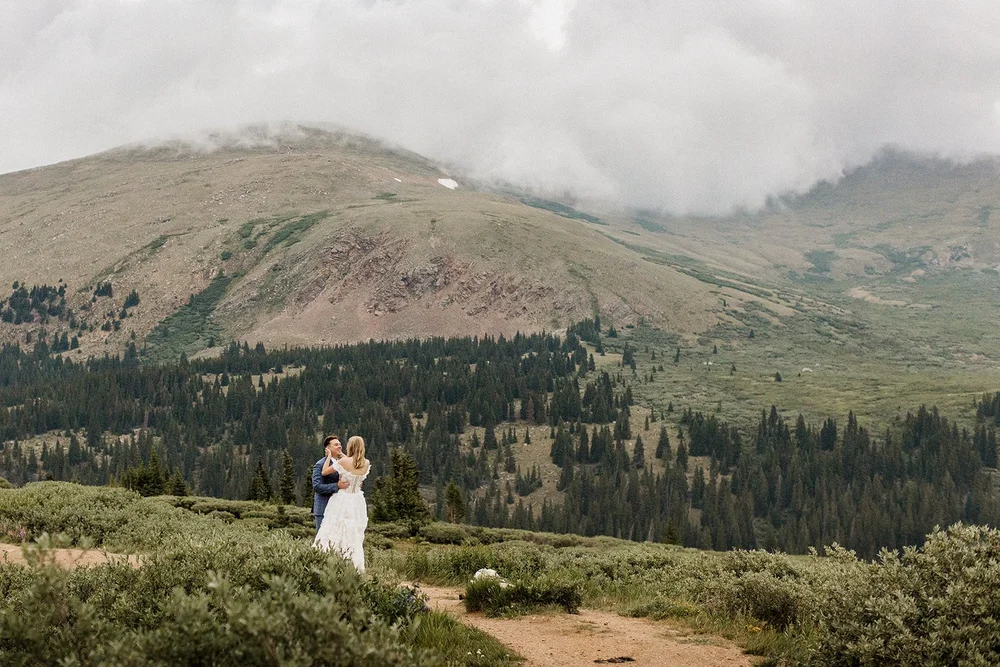
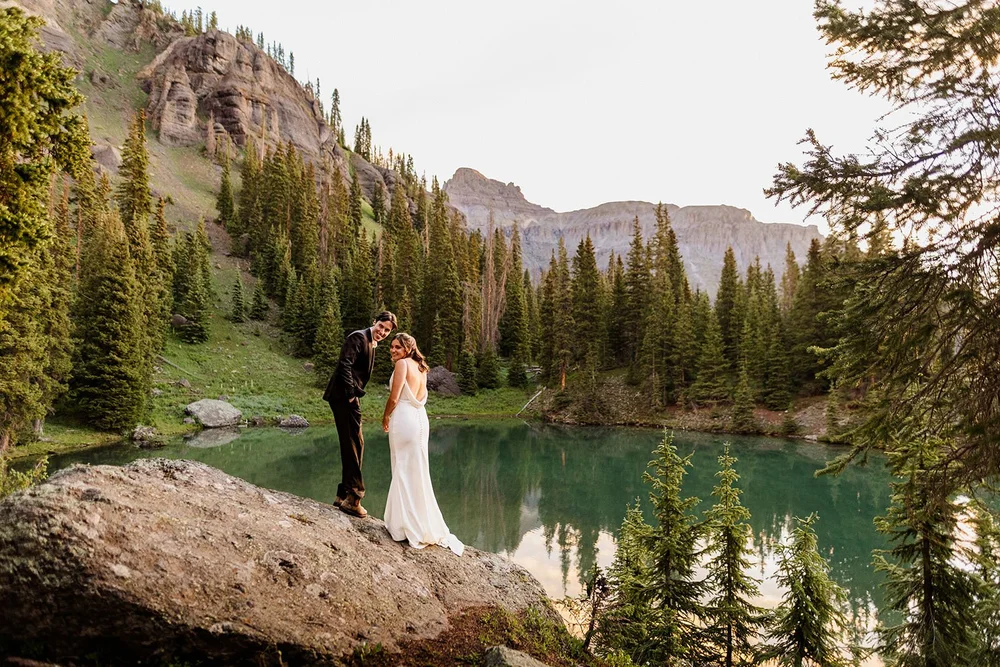
When to Elope in Colorado
The time of year you elope decides everything. Location options, road access, weather reality, the whole feel of the day.
Elevation decides the rest of it. You can leave Denver in shorts, drive ninety minutes, and be standing in snow in June. That's not a fluke, that's just Tuesday at 11,000 feet.
Three questions worth sitting with before you lock a date:
- What do you actually want the scenery to look like? Snow, vibrant wildflower colors, green mountains, sunny alpine lake?
- How far are you willing to drive? From the airport, from the Airbnb, from the nearest real bathroom?
- How do you personally handle cold, wind, heat, and a 2pm thunderstorm?


Kimberly is so creative, passionate, professional, and I truly couldn't recommend anyone better for a 5am elopement!
Jolie
You do not have to figure out which season is right on your own. That's a whole conversation and it's my favorite part.
Send me the window you're leaning toward and I'll tell you straight whether it's open, and whether there's a better week hiding right next to it.
Where to Elope in Colorado
This is where people spiral. Colorado has an absurd number of good spots and the internet (me included) will happily bury you in all of them.
So here are six places and what each one is actually for. Find the one that sounds like the day you're picturing and go read that guide. Ignore the other five.
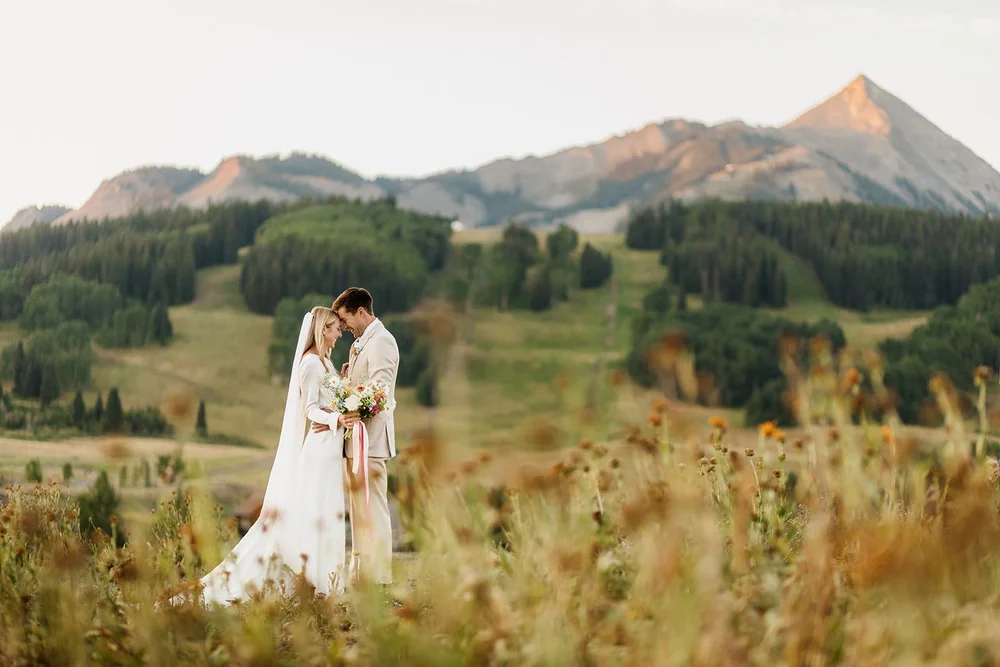

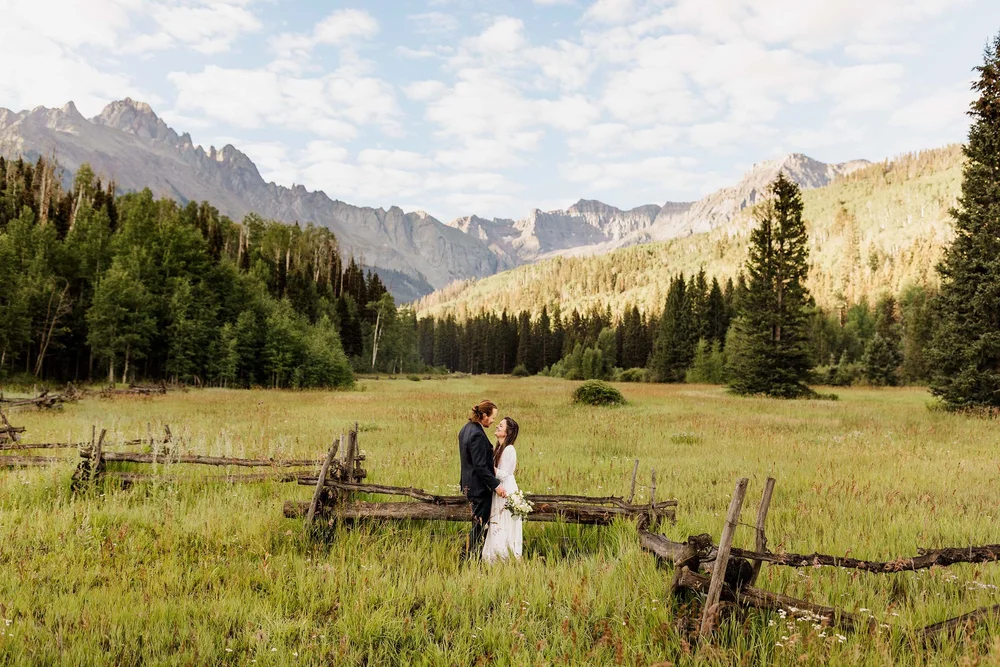
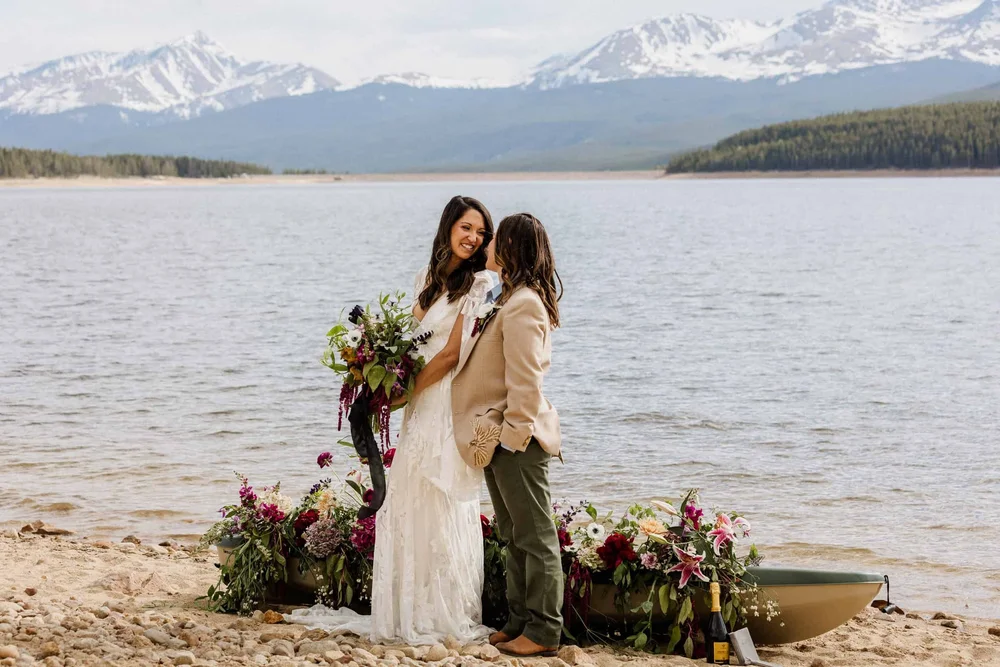
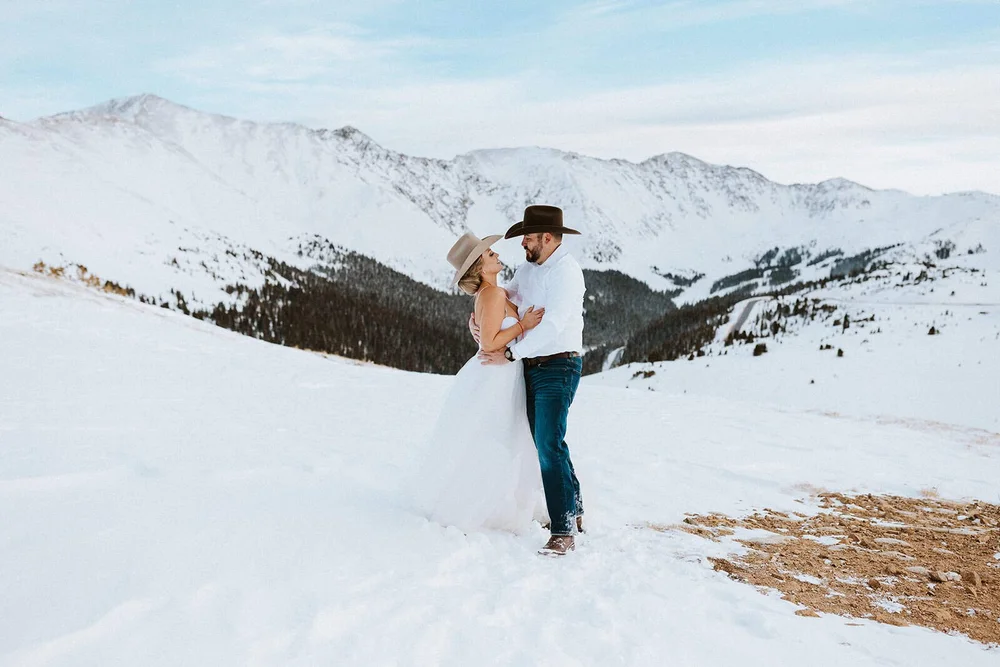
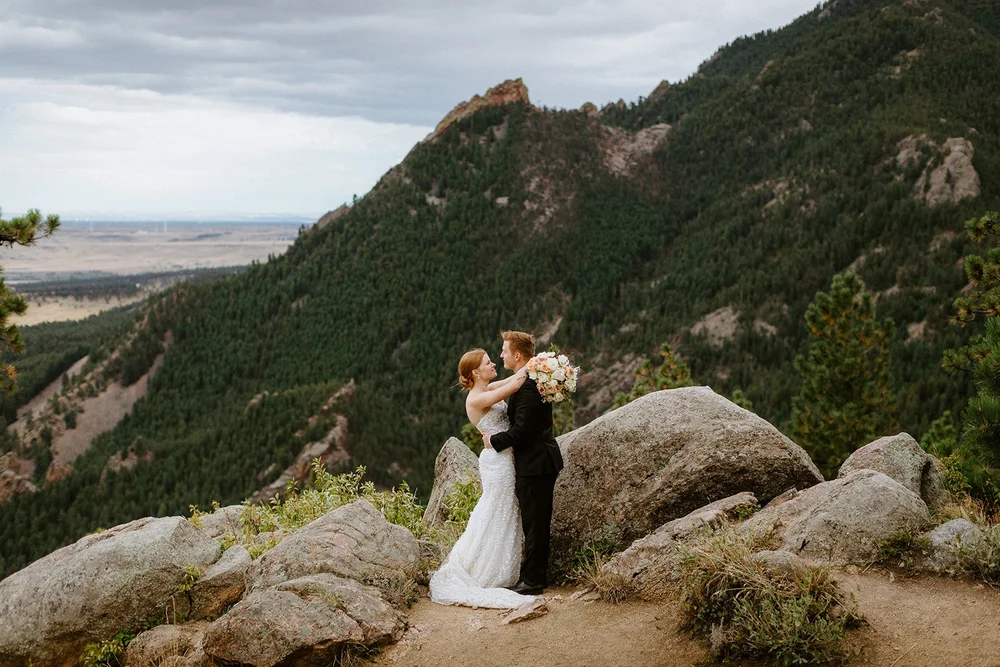
Kimberly helped us find the most beautiful ceremony location and knows the mountains like the back of her hand!
Katherine
The best spots I know don't have names, they have coordinates.
Every couple gets a custom Google Map with those pins on it. Tell me what you're after and I'll build yours.
How Much Does It Cost to Elope in Colorado?
The bare minimum to legally get married in Colorado is $30. That's the marriage license. Arguably the cheapest wedding available anywhere.
From there it's entirely up to you. I've had couples do the whole thing for under $2,000 and couples spend $25,000 on four people and a cabin. Both were great days. Neither one was better than the other because of the number.
What I'd actually suggest: pick the two or three things you'll care about a year from now, fund those properly, and be genuinely cheap about the rest. Most people can name their two things immediately. The rest is stuff you'd be buying because a checklist told you to.
Just the Two of You, or Twenty of Your Favorites
Guest count changes the day more than most people expect. Permits get pickier, location options narrow, and the bigger it gets the harder it is to keep the day feeling like yours instead of a small wedding.
None of that is a reason not to bring people. It's just the thing to decide on purpose instead of by accident.
Just the two of you
The purest version. You say vows nobody else will ever hear. You cry, you laugh, you eat the entire charcuterie board in silence.
A small group
A handful of people who love you, don't mind last-minute changes, and won't complain about the altitude. Under 10 and it still feels intimate. This is what I did.
A micro-wedding
More people, way less wedding. Ceremony somewhere ridiculous, dinner in a mountain town after, and none of the parts you were only doing for other people. Twenty is still small enough that you'll actually talk to everyone.
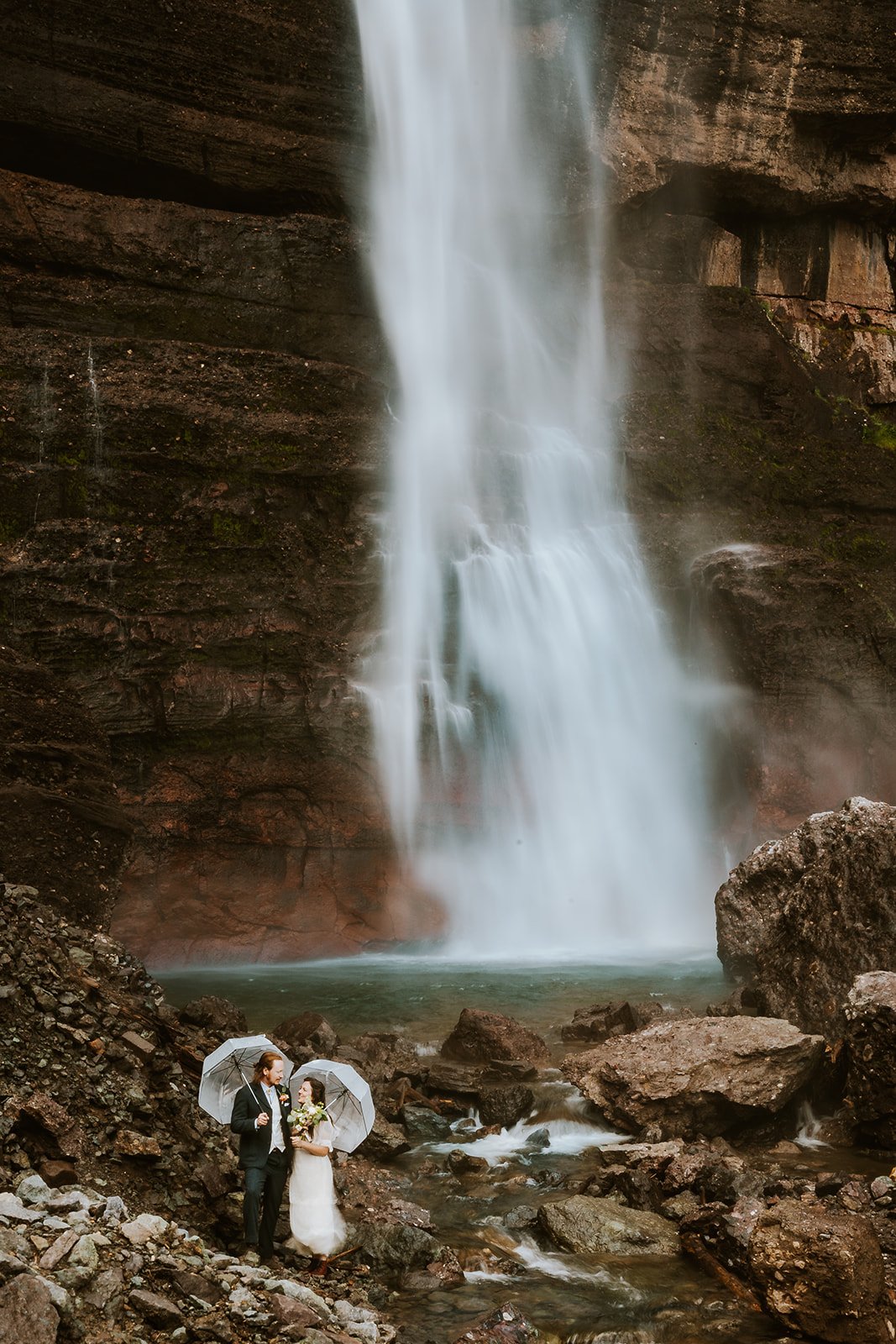
Permits and Your Colorado Marriage License
Two things to sort. Neither is hard. Both have deadlines.
Permits, by land type
National Parks
RMNP, Great Sand Dunes, Black Canyon, and Mesa Verde all require a Special Use Permit for a ceremony, no matter how small. You apply through the park itself, and fees vary. Great Sand Dunes is $200 and non-refundable, and they only book two ceremonies a day. Some parks assign you a site, some give you room. Apply early, especially RMNP, where prime dates go months out. Start with the RMNP wedding permit page.
National Forest and BLM
Generally do not require a permit unless you're bringing decor or a large group. If you do need one, it comes from the relevant Ranger District. Call them directly and ask them to send the answer in writing, in case a ranger stops you. The websites are never current.
State Parks
Usually require a permit and often have designated ceremony areas. Contact the specific park.
When in doubt, call. And if the paperwork is making your head spin, this is one of the things I take off your plate entirely.
Getting your marriage license
- WhereAny Colorado County Clerk and Recorder's office. It does not have to be the county you're getting married in, which matters a lot if you're eloping somewhere remote. Grab it in Denver before you drive four hours southwest. You do have to return it to the county that issued it, though. No picking it up in Denver and dropping it at the Ouray clerk.
- What to bringAn appointment, both of you in person, and a valid government issued ID or passport for each of you. You don't have to be a Colorado resident. If either of you has been divorced, bring the date and location of the dissolution.
- What it costs$30, cash or card. Call ahead or check the county site to confirm which one they take.
- Valid for35 days from the day you receive it.
- AfterYou have 63 days to return the signed license, counted from the day it was issued and not from your wedding day. Plan backward from that if you're picking it up early.
Find your county
Use the map below, or Google the city plus "county clerk and recorder Colorado". Most counties require appointments now and some book out fast, so don't wait until the day before. Some only offer them on specific days, at specific times.
County quirks worth knowing
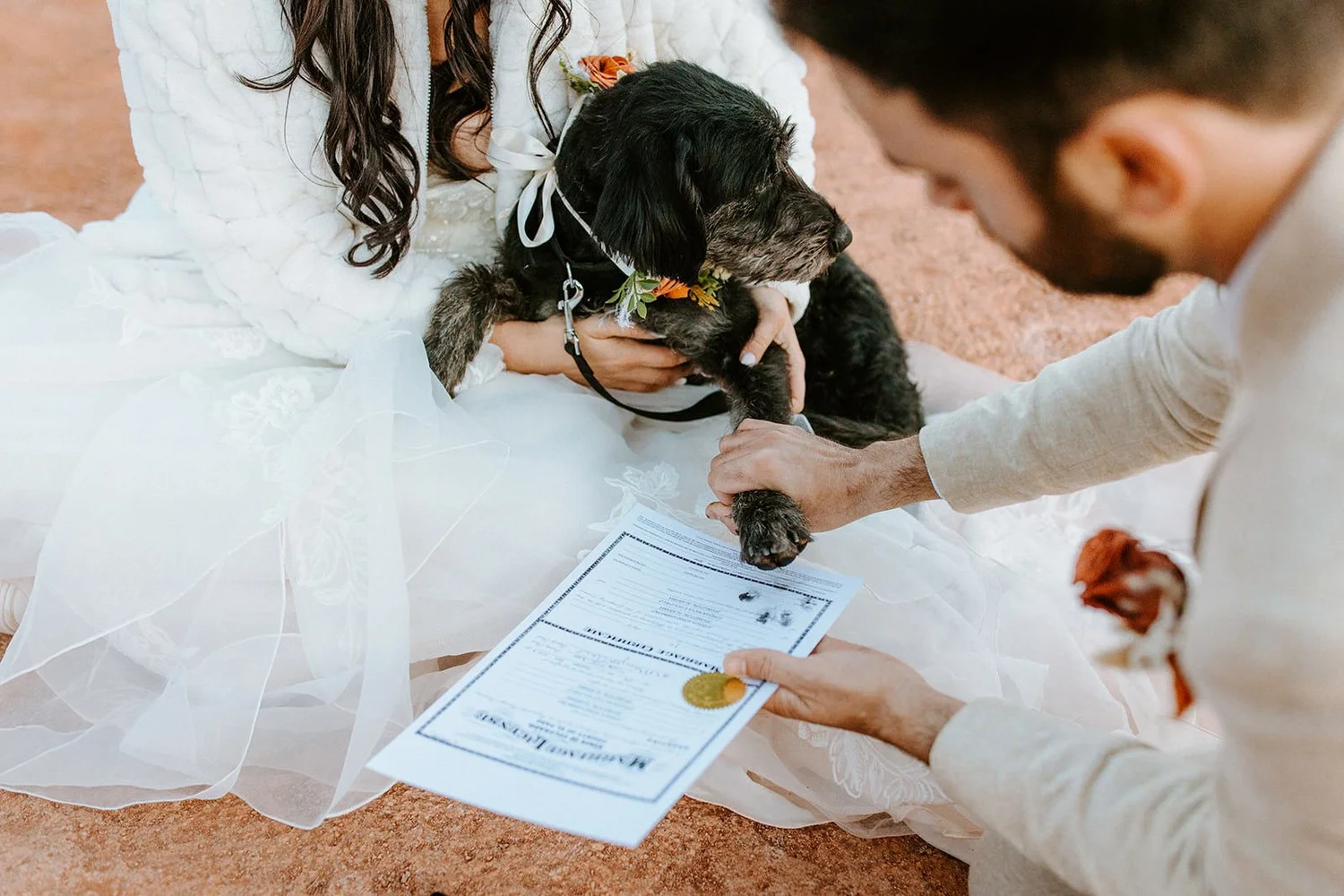
Broomfield does rainbow licenses
In case you want the coolest looking marriage license in existence. Same $30, same process, just prettier. Worth the drive if you're already close.
Boulder is Zoom only
Boulder requires a Zoom appointment and will only mail the license to a Colorado address, which is not practical from out of state. Contact them ahead and ask to pick it up the same day as your online appointment.
Denver books up fast
If you can't get in, try Jefferson or Broomfield. More availability, still close. Most counties release new appointments about 6 days out, so set a calendar alarm for the release date if you're picky about the time.
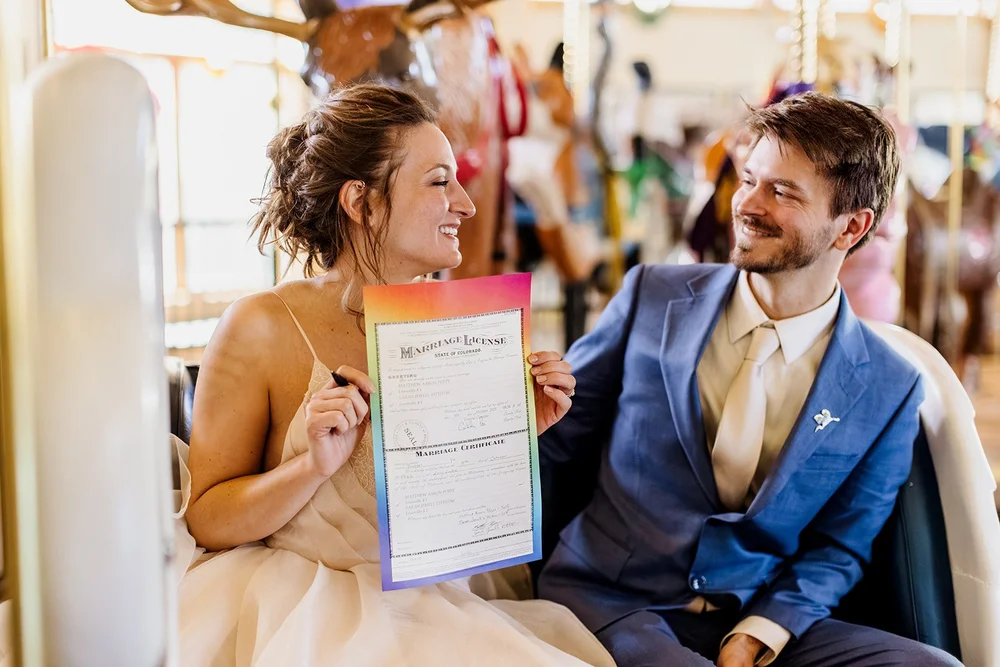
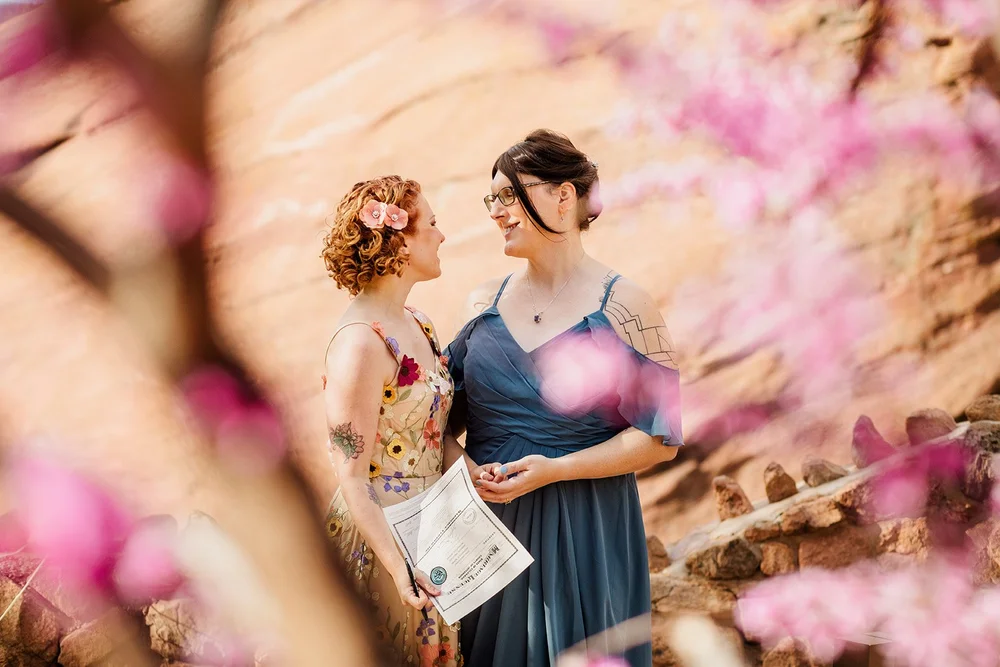
Kimberly was amazing. She made sure to capture our special day and didn't rush us at all. She had great ideas and also loved any we had. I would definitely recommend her to anyone!
Kacie
Permit windows, road closures, license deadlines, and where to eat. I keep all of it in my head so you don't have to keep it in yours.
Planning support is included in every package. I already know which of these needs to happen first, and I'll tell you when.
How to Write Your Elopement Vows
The most intimidating part of the whole thing, and the one you'll put off the longest.
Here's the fix: start now, months out, in your notes app. The weird inside joke. The specific thing your partner does that you complain about constantly and would miss immediately. The embarrassing memory from the trip where everything went sideways. Write them down as they hit you, and by the time you sit down to actually write, you're editing instead of staring at a blank page.
The only real rule is that they should sound like you talking. Not like what you think vows are supposed to sound like.
How to actually write your vows without it feeling like homework
A true story
Mine had a fart joke in them. It was the realest thing he could have said. Our families weren't there to hear it, and that was entirely the point for us.
What to Pack for a Colorado Elopement
Depending on elevation you can hit every season in one day out here. 85 in Denver, 40 on a ridge above treeline. This is the list I send every couple.
The practical stuff
- Marriage license and a pen
- Rings
- Vows written on something. Paper, a card, a journal. Nobody has ever looked back at their wedding photos and been glad about the iPhone in their hand
- A real backpack if there's any walking involved
- Downloaded maps and a downloaded playlist. Cell service disappears fast out here
- Portable charger. Phones die fast in cold and at altitude
- Headlamps for both of you if we're starting before sunrise
- A full tank. Long stretches between stations out west
- Cash. Some mountain towns have limited ATMs and cash-only spots
- Wet wipes for after a dusty 4WD road
What you're wearing
- A jacket you don't mind being photographed in
- Gloves and a hat, any time of year
- Hand warmers
- Rain jacket
- Packable puffy or a blanket to throw on between shots
- Sturdy shoes for uneven ground
- Hiking boots if we're going anywhere off pavement
- Microspikes in winter or early spring
Food, water, and staying functional
- Snacks. Then more snacks
- Real food, not just snacks
- Water, more than you think
- Sunscreen and sunglasses
- Bug spray in summer
- Chapstick. Non-negotiable. Forget it and you'll hate your life
- Advil and any medication, especially if you're bad at drinking water. Dehydration hits harder up high
- Small first aid kit if we're going off trail
If your dog is coming
- A leash and collar you like being photographed
- Food, water, poop bags
- Treats. I am going to need them to look at the camera at some point and cheese is extremely persuasive
- A friend to take them once we head somewhere they cannot go
The one I repeat the most
Bring a jacket you feel good in. Not the emergency jacket from your trunk, an actual jacket you'd wear on purpose. Above treeline it's cold enough that you'll have it on for most of the day, which means it's in most of the photos. There is always one person who packs the ugly one anyway and mentions it later.
What the Day Actually Looks Like
The ceremony is 5 to 20 minutes. The rest of the day is yours, and building that part well is most of my job.
Pick your time of day first, because it decides what the photos look like more than anything else. Sunrise means you beat the storms and the crowds. Golden hour means you've had the whole day in the mountains. Midday is harsh light, building weather, and tourists. Hard pass.
Then give yourself more time than feels necessary for the drive, the wandering, and the bathroom situation.
I build real timelines for every couple, based on actual sun data for your date and location, with buffer for what Colorado does. This one's a sunrise, which is my favorite but not the only way to do it.
A real timeline at Brainard Lake
-
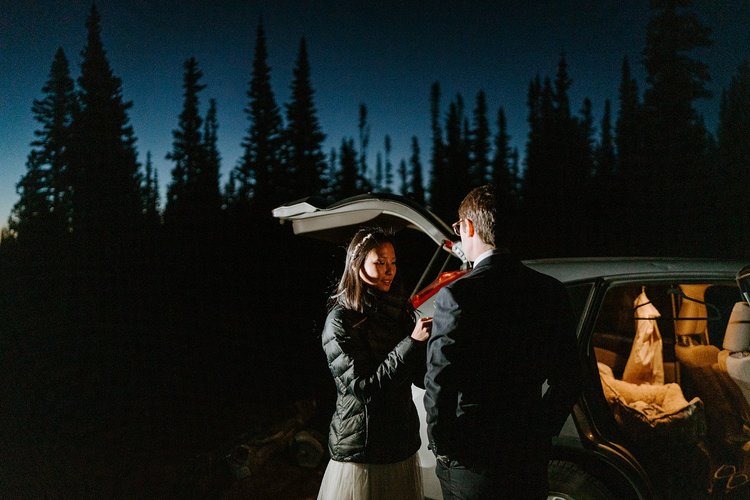 4:45 AM
Getting ready
Slow morning under the stars. Coffee, details, final touches.
-
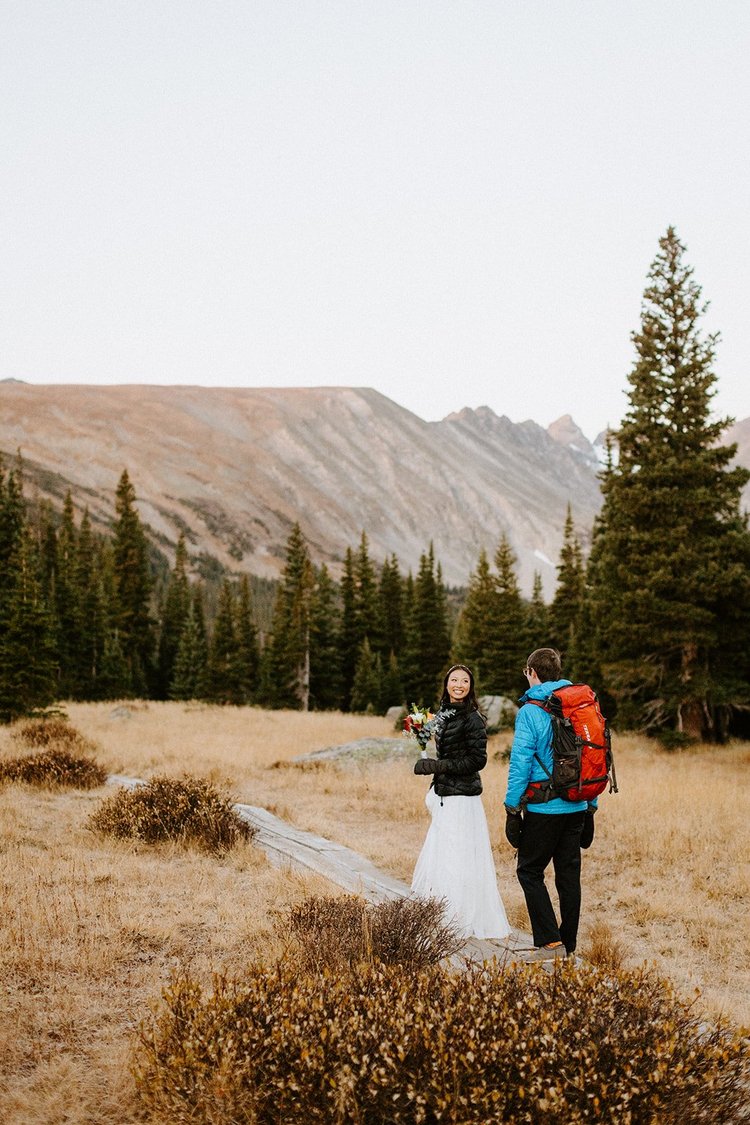 5:15 AM
Headlamp walk
To the bridge for a first look while the mountains wake up.
-
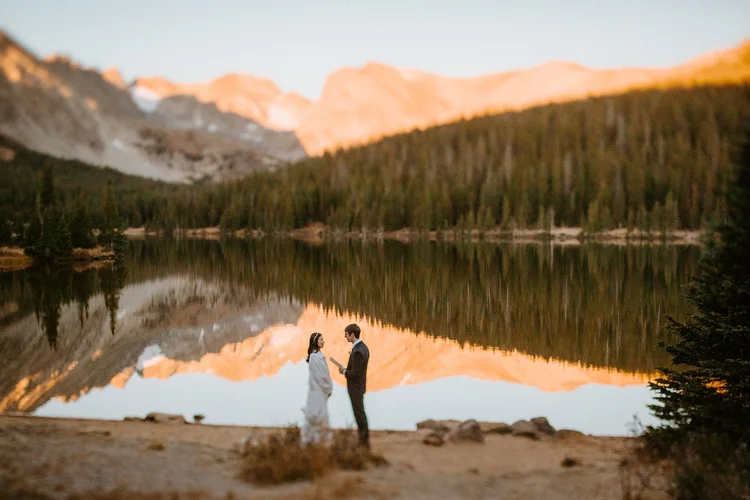 5:45 AM
Ceremony
At Long Lake, first light on the peaks, alpenglow on the water.
-
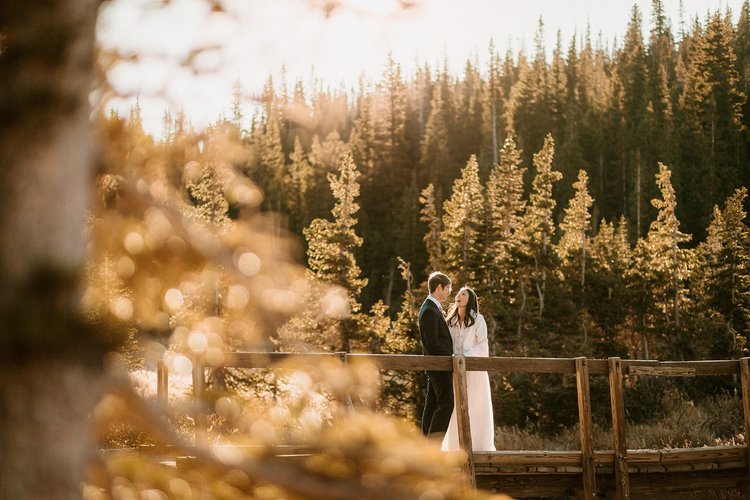 6:15 AM
Shoreline wandering
Photos and all the in-between stuff.
-
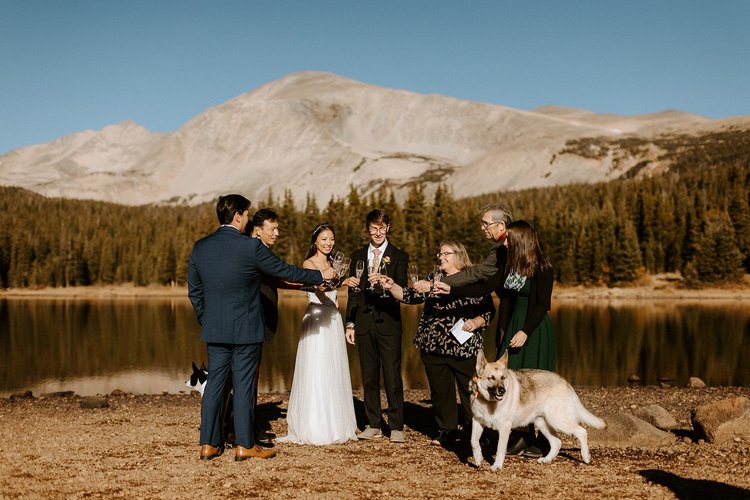 7:30 AM
Picnic at Brainard Lake with guests
Champagne, a first dance, hugs, everyone together.
-
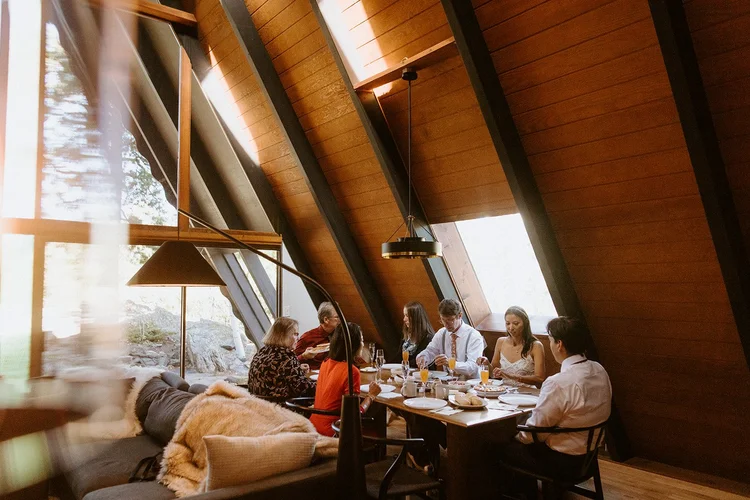 9:45 AM
Back to the Airbnb
Brunch, cake, puppy naps.
-
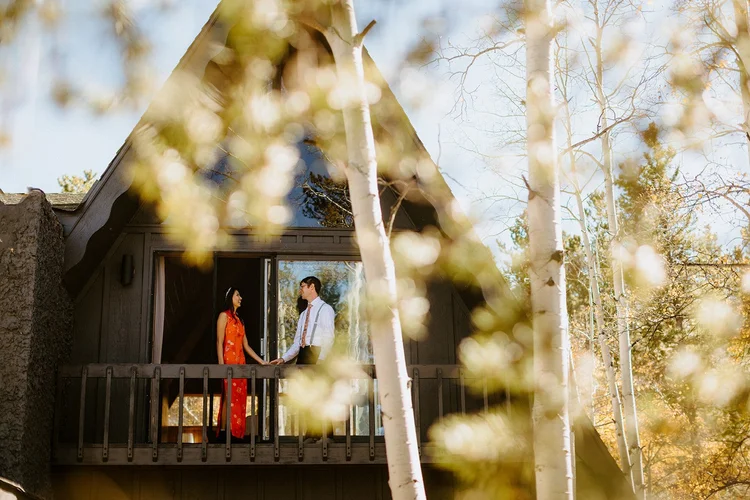 12:45 PM
Done
Just a whole lot of “did we really do that?”
She made us feel at ease and seamlessly blended herself into the backdrop all while capturing every special moment.
Meagan
The Questions Everyone Actually Has
Do we need an officiant in Colorado?
No. Colorado allows self-solemnization, so no third party is required.
Do we need witnesses?
Not legally. You can have someone sign if you want. Loved ones, strangers, your dog, your photographer.
What's the best time of year to elope in Colorado?
July for wildflowers. Late September for aspens. Summer has afternoon thunderstorms, so plan a morning ceremony. Fall weather is more predictable. Winter is beautiful with limited access. Spring is mud season up high, so unless you're staying near Denver, wait for June.
Can you elope in Colorado without hiking?
Yes, and this is the thing I specialize in. Drive-up alpine lakes, 4WD roads above treeline, short flat walks to lake viewpoints, mountain pass pull-offs with absurd views. You don't have to earn the scenery here.
Can we elope on a weekday?
Yes, and you probably should. Same mountains, a fraction of the people. Tuesday through Thursday are the quietest almost everywhere.
What do we wear?
Whatever you want, but think about terrain first. I've shot couples in full formalwear at 13,000 feet and couples in flannel and boots in a wildflower field. Both were perfect.
What if it rains?
Colorado rain is usually 20 dramatic minutes followed by the best light you've ever seen. We work with it. I've never had a bad rainy elopement and the moody ones are often my favorites.
Can our dog come?
Depends on the location, but usually a hard yes. Strongly encouraged. They can also sign your marriage license, which is covered up in section 06. How to include your pets in your elopement.
How far in advance should we plan?
For RMNP and other permit-heavy spots, six months minimum for peak season. Forest and BLM land gives you far more flexibility. If you're feeling spontaneous, reach out anyway. I once helped a couple elope in under a week.
Do we need a permit?
Depends where. Forest or BLM land, usually no for a small ceremony. National Parks, yes, always, apply early. When in doubt, ask. This is one of the things I handle.
What Going In Blind Actually Costs
None of this is a disaster. All of it is avoidable.
- You pick October 17th because it’s a Saturday, and you arrive to bare branches and brown hillsides
- Your rental sedan makes it 200 yards up the road and stops
- You get to the spot at noon, the light is flat, and there are 40 people behind you in every frame
- The RMNP permit window closes and the only slots left are the ones nobody wanted
- You spend the morning of your wedding on the phone with a ranger district instead of with your person
That's why I do the planning part instead of just showing up with a camera.

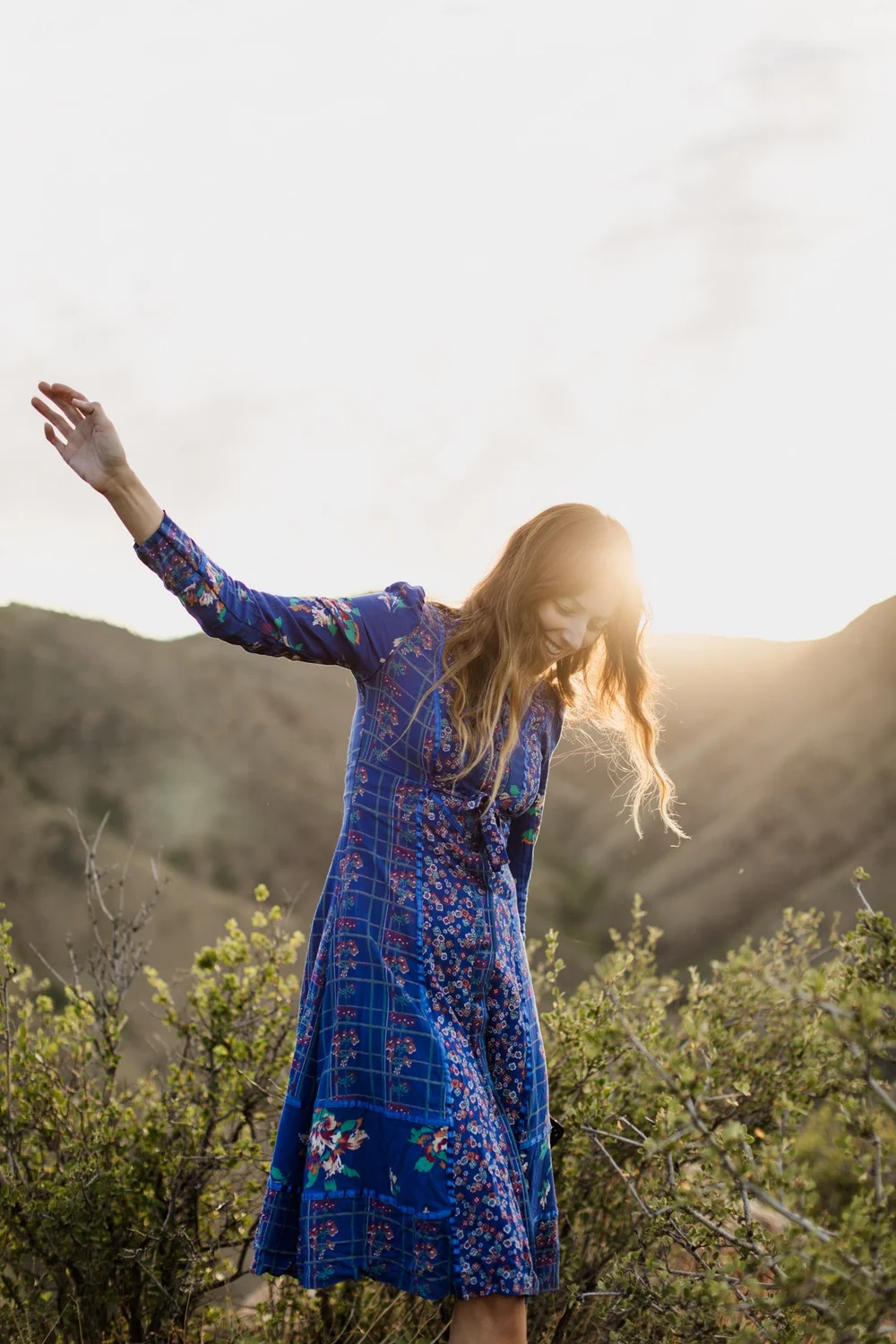
The one with the refrigerator in her car
Hi, I'm Kimberly
Most couples I talk to aren't worried about the photos. They're worried about picking the wrong month, or the wrong spot, or finding out at 7am that the road closed last week and nobody told them. That's the part I take off your plate.
Ask me about a date and I'll tell you what's actually happening then. Mud season, wildflower peak, when the aspens turn and when the road to see them closes, which weekends every trailhead in the state is full. That's the stuff that decides your day way more than picking a pretty spot does.
Ready to Plan Your Colorado Elopement?
Here's what I want for you.
You wake up early. Coffee in the car. You drive up a road you've never been on, put your clothes on next to the truck, and say things to each other that nobody else will ever hear. You laugh at the wrong moment. Your dog is there. There are pancakes after. (Optional but strongly recommended.)
That's it. That's the whole thing. Everything else on this page exists so that morning can happen without you carrying any of it.
I'll handle the locations, the permits, the timelines, the backup plans. You show up, say your vows, and don't forget the snacks.
If any part of this made you go "oh hell yeah," fill out the form and tell me everything. Location, season, vibe, whether your dog is coming. Full pricing and way too much other information will be in your inbox within 48 hours.