
How to Plan a Colorado Winter Elopement
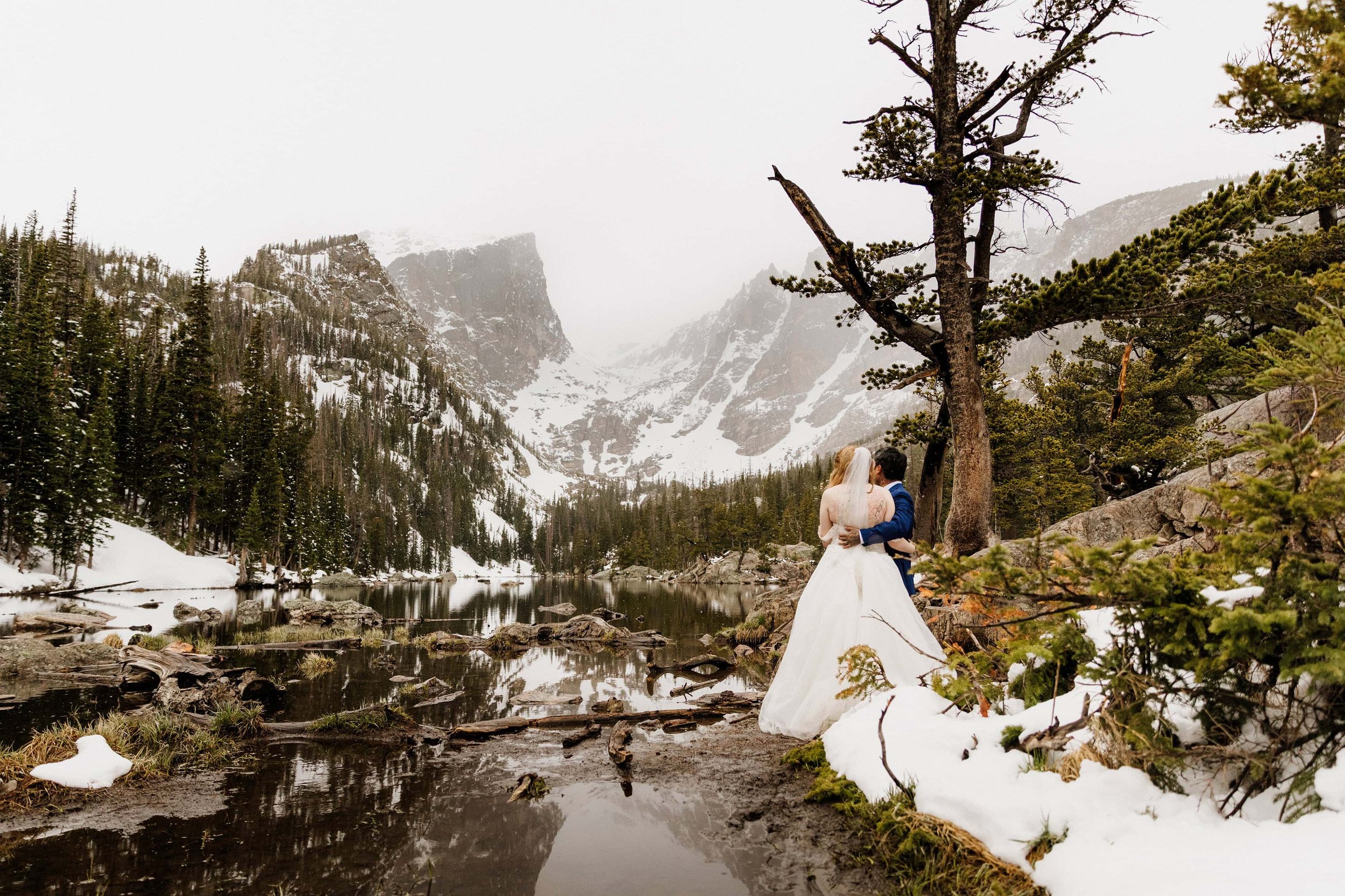
Winter is the quietest time of year to elope in Colorado. The summer trail traffic is gone, and hotels and cabins cost less in any town that isn't a ski town. The sun also sets somewhere between 4:30 and 6pm, so you can do sunset photos and still make dinner. (Or, if you're a grandma like me, be in bed with whiskey and mac & cheese before 8.)
The catch is that winter does whatever it wants. Blizzards show up, roads close, and I-70 fills with ski traffic. So the first thing I tell couples is to be flexible with the day, the timeline, and your expectations. I keep the day after your elopement open in case the weather moves us.
It will also be cold, so plan your outfit around that. You'll want long sleeves or a cute coat you don't mind being photographed in, and microspikes on your boots if we're going anywhere with snow. More on all of that below.
Start by deciding what kind of winter you want. Feet of snow? A dusting on the mountains behind you? No snow at all? That decides where in Colorado you go and which month you pick.
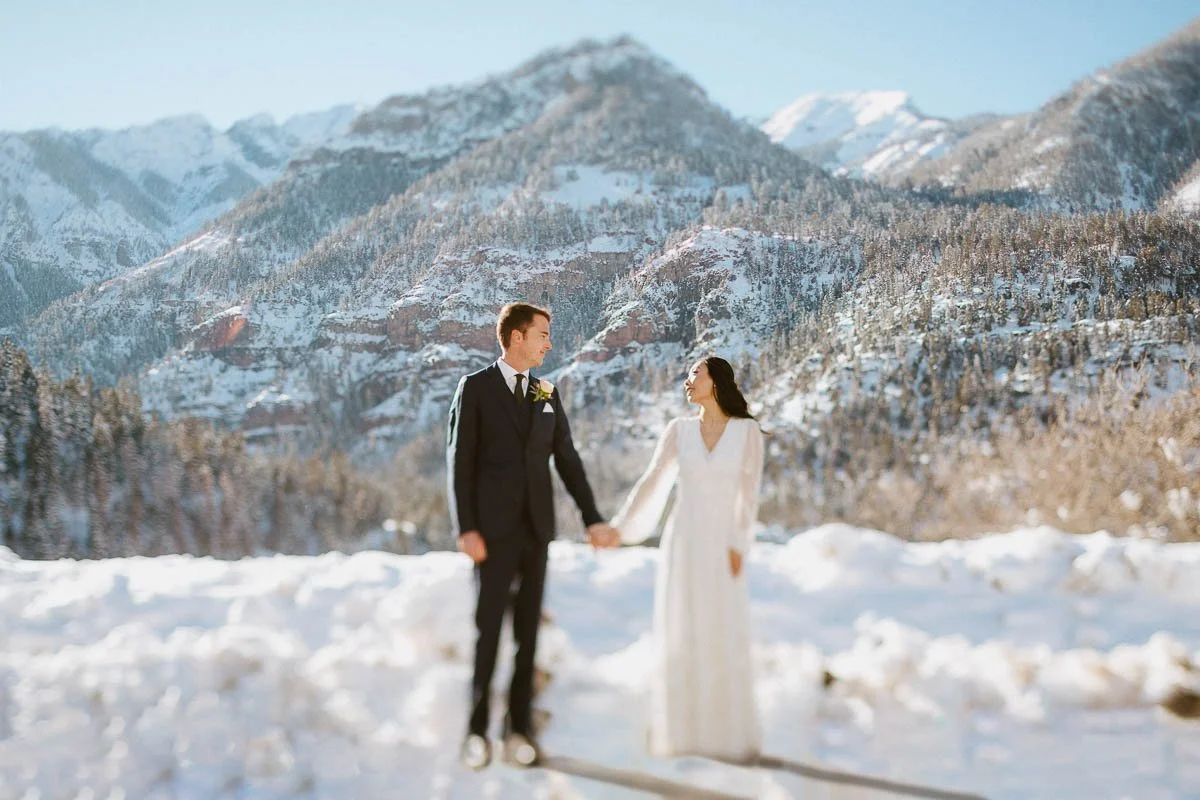
When to elope in Colorado in the winter
The best months
Late November and all of December are my favorite winter months out here. It's still relatively warm, and most things are still accessible because we don't have seven feet of snowpack yet. The exception is if you want to do something like snowmobile into the backcountry. For that we'd go later in the season.
January and February are ridiculously cold. January always feels like the coldest to me. And people, including me, are always surprised to hear that March and April are some of the snowiest months in Colorado.
Winter weather by month
| Denver | Estes ParkRMNP | Ouray | Telluride | Grand Junction | |
|---|---|---|---|---|---|
| November | 53° / 26°❄ 7 in | 44° / 24°❄ 11 in | 44° / 24°❄ 20 in | 45° / 13°❄ 19 in | 52° / 28°❄ 2 in |
| December | 44° / 18°❄ 7 in | 36° / 16°❄ 13 in | 35° / 16°❄ 17 in | 36° / 2°❄ 19 in | 39° / 18°❄ 5 in |
| January | 45° / 19°❄ 6 in | 37° / 16°❄ 10 in | 34° / 15°❄ 22 in | 36° / 0°❄ 24 in | 38° / 17°❄ 5 in |
| February | 46° / 20°❄ 7 in | 38° / 16°❄ 13 in | 37° / 19°❄ 20 in | 38° / 5°❄ 22 in | 46° / 24°❄ 3 in |
| March | 56° / 28°❄ 9 in | 45° / 21°❄ 19 in | 45° / 25°❄ 24 in | 44° / 13°❄ 23 in | 58° / 32°❄ 2 in |
| April | 62° / 34°❄ 6 in | 52° / 26°❄ 19 in | 52° / 31°❄ 15 in | 51° / 22°❄ 13 in | 66° / 38°❄ 1 in |
| May | 71° / 44°❄ 1 in | 61° / 35°❄ 10 in | 63° / 39°❄ 4 in | 60° / 29°❄ 5 in | 77° / 47°❄ 0 in |
Average high / low in °F, and average snowfall for the month. Source: NOAA 1991 to 2020 climate normals. Denver numbers are from the airport station.
What each month looks like
Mud season
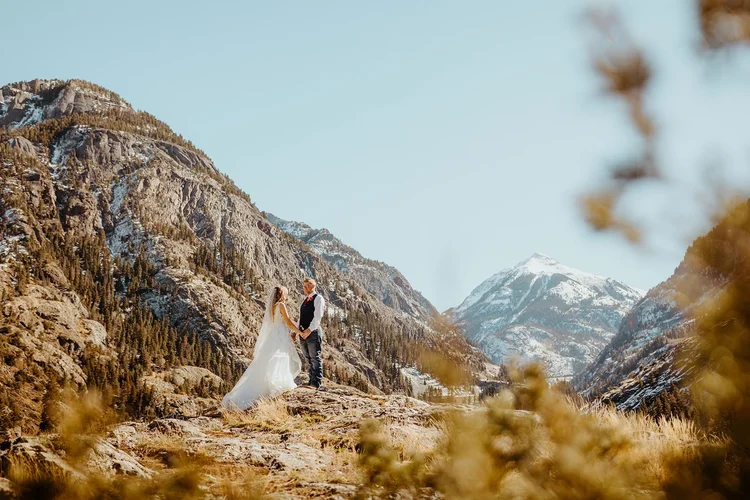
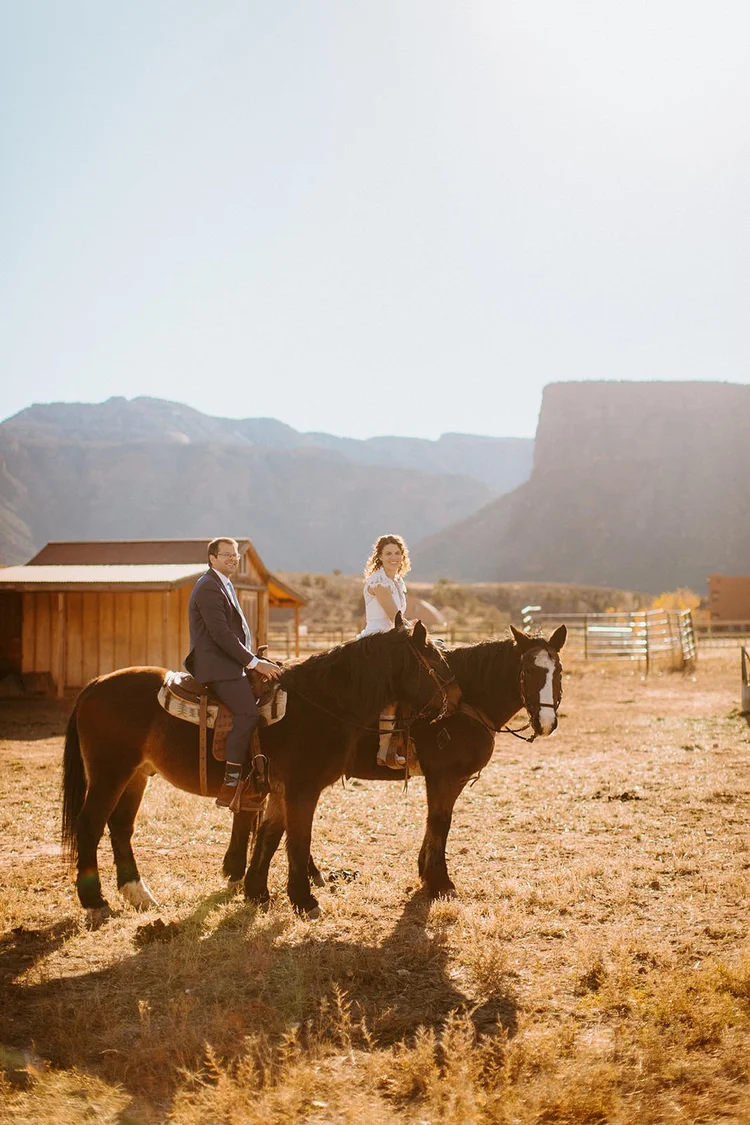
Mud season is the stretch on either side of ski season when the snow is melting (or hasn't piled up yet), everything is muddy and slushy, and tourism drops. Some restaurants and shops in mountain towns close for it. In Telluride that's mid October to mid November, and again mid April to mid June. The upside is that hotels and rentals get a lot cheaper.
The desert has its own version in early winter and again in March. A Jeep road can be fine in the morning and a mud pit by the afternoon once the ground warms up.
Holidays
Christmas, New Year's, and the three day weekends line up nicely with time you already have off. But everything is more expensive then, especially at Christmas, so plan for that if you're thinking about a holiday date.
How many days to book
The more days, the better. Get here early so you can acclimate to the altitude, then have your elopement, then keep a couple of days after it in case we need to move things around.
How I watch the weather
I start looking at the forecast 10 days out and start taking it seriously around five to seven days out. At three to four days I'll reach out to talk about backup plans or moving the day, as a "we might want to think about this." We usually make the call a day or two before, if it's supposed to be in the negatives or a dangerous blizzard.
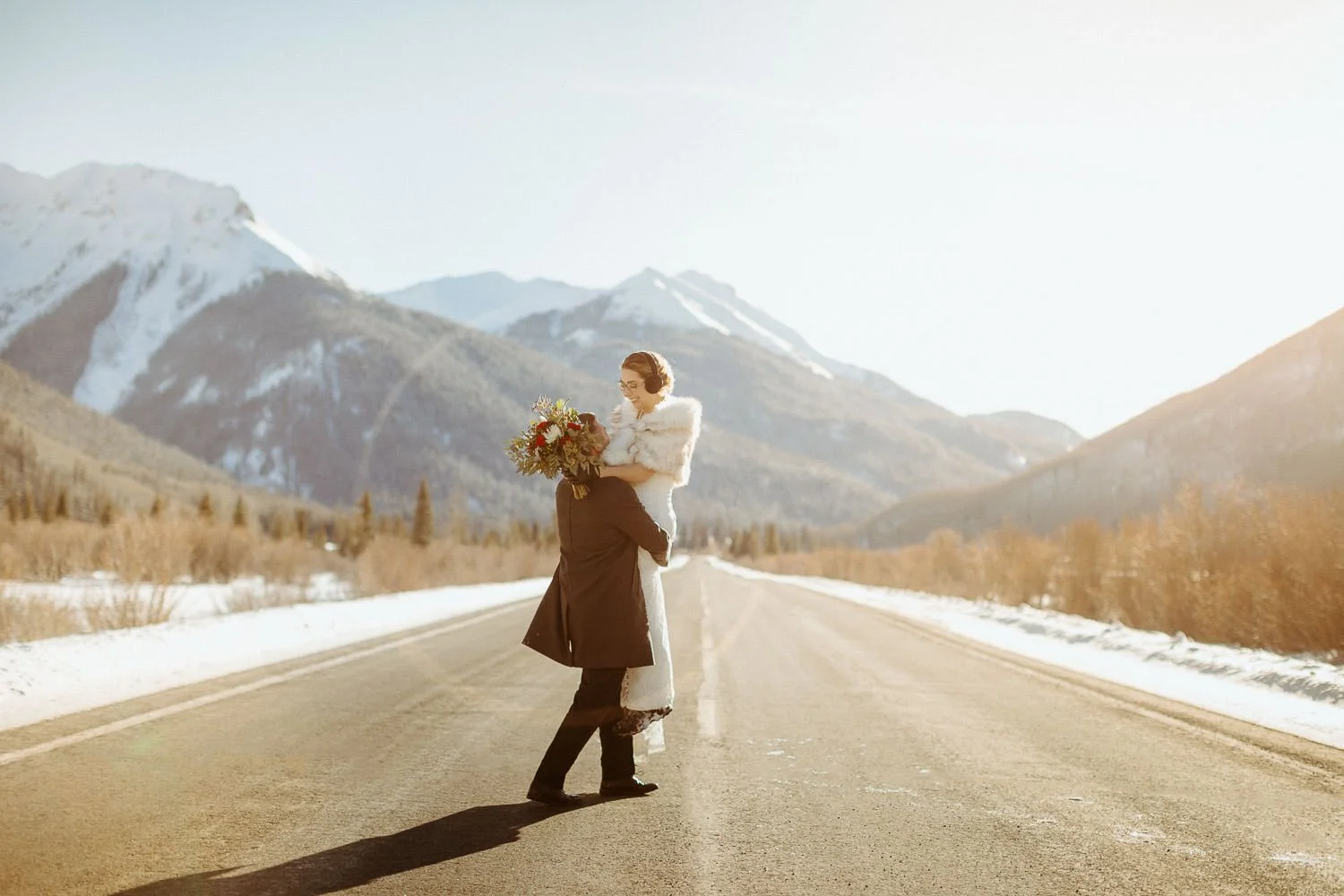
I had a micro wedding in Ouray one February where there was a blizzard for three straight days. The Million Dollar Highway, the paved road up into the mountains that's open all year, was closed. So the backup plan had to work for the couple and their 10 guests: a trail that loops around town with a couple of spots we could use. Luckily, the road opened that morning, so we never needed it.
Where to elope in Colorado in the winter
These are the places I'd take you in the winter. If it's open and we can get to it, it's an option, and after that it's all about being prepared for it. I'd pick sunset over sunrise at pretty much all of them, because it's warmer. For feet of snow, go to the mountains. For little or none, go to the desert.
Near Denver
These are all an hour and a half or less from the Denver airport. Rocky Mountain National Park and Loveland Pass are the snowy mountain options. Garden of the Gods and Lost Gulch sit lower, so they get less snow.
Rocky Mountain National Park
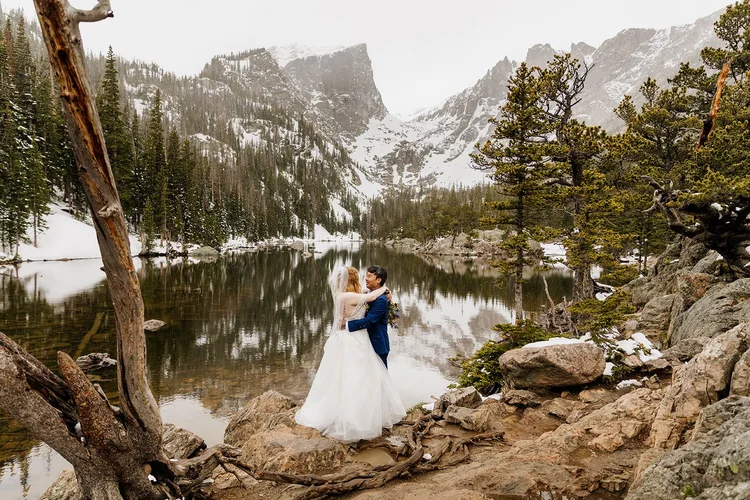
This is always my number one recommendation for a winter elopement. It's one of the only places in Colorado where the roads are consistently plowed, and you can call and ask someone about road and weather conditions that day. The trails get packed down, so you don't need snowshoes, microspikes are enough. There are also a lot of different spots close together, so we can see more with less driving.
Where I go in winter:
Dream Lake, if you're up for a short hike
Sprague Lake
Lily Lake
3M Curve
Trail Ridge Road, as far up as it's open
Trail Ridge Road (the big one that goes up above the peaks) closes for winter at Many Parks Curve, and Old Fall River Road closes too. Timed entry runs May to mid October, so it isn't a thing in winter. You still need a wedding permit, same as the rest of the year. It's just easier to get one.
Closest town: Estes Park. Closest airport: Denver (DEN), about 1 hour 24 minutes.
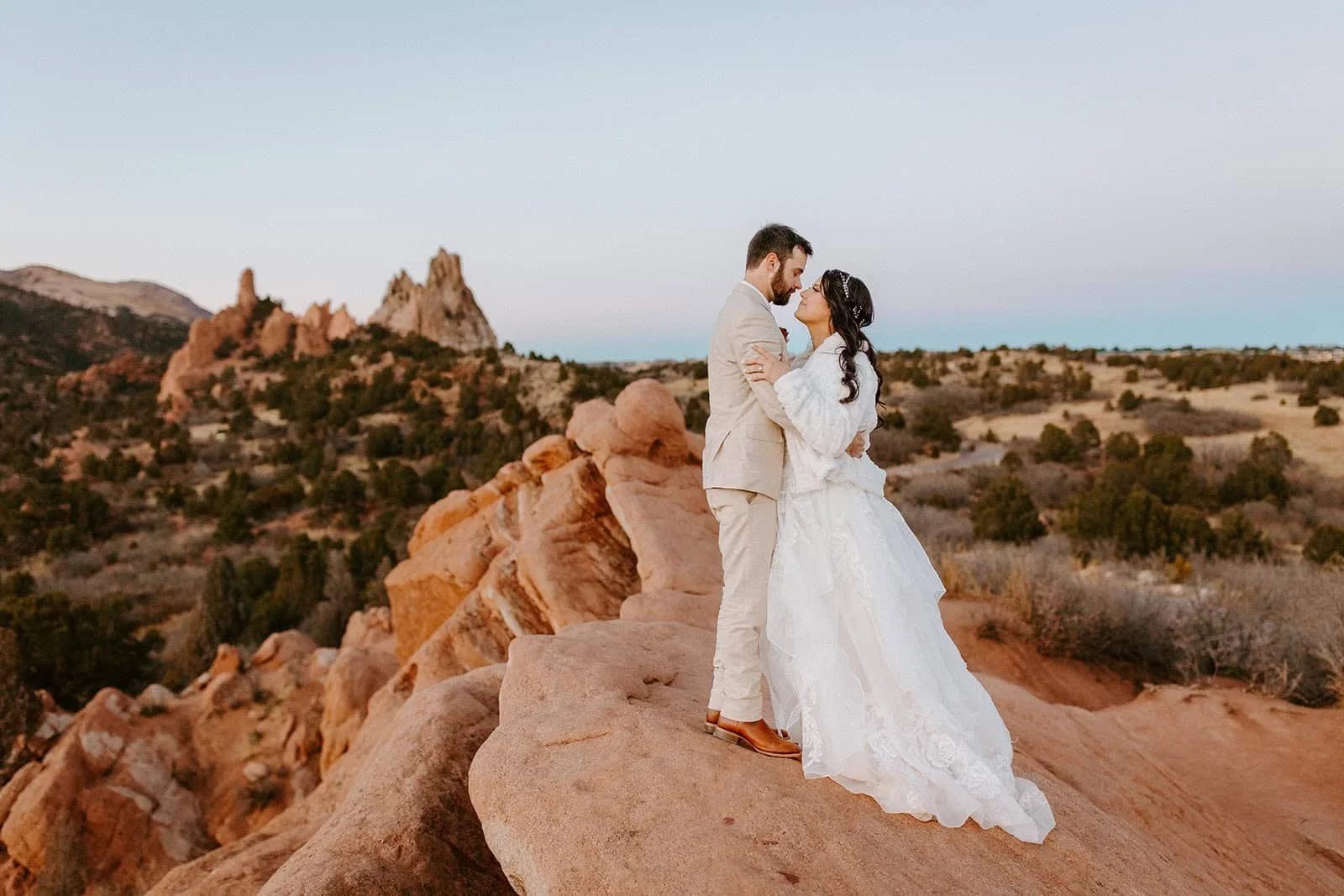
Garden of the Gods
Big red rock formations in Colorado Springs. It's lower elevation, so there's less snow, and it's busy all year, so what snow there is doesn't build up on the trails. Expect about the same crowds as summer. Afterward you've got Pikes Peak and Manitou Springs nearby.
Closest airports: Colorado Springs (COS), 25 minutes. Denver (DEN), 1 hour 18 minutes.
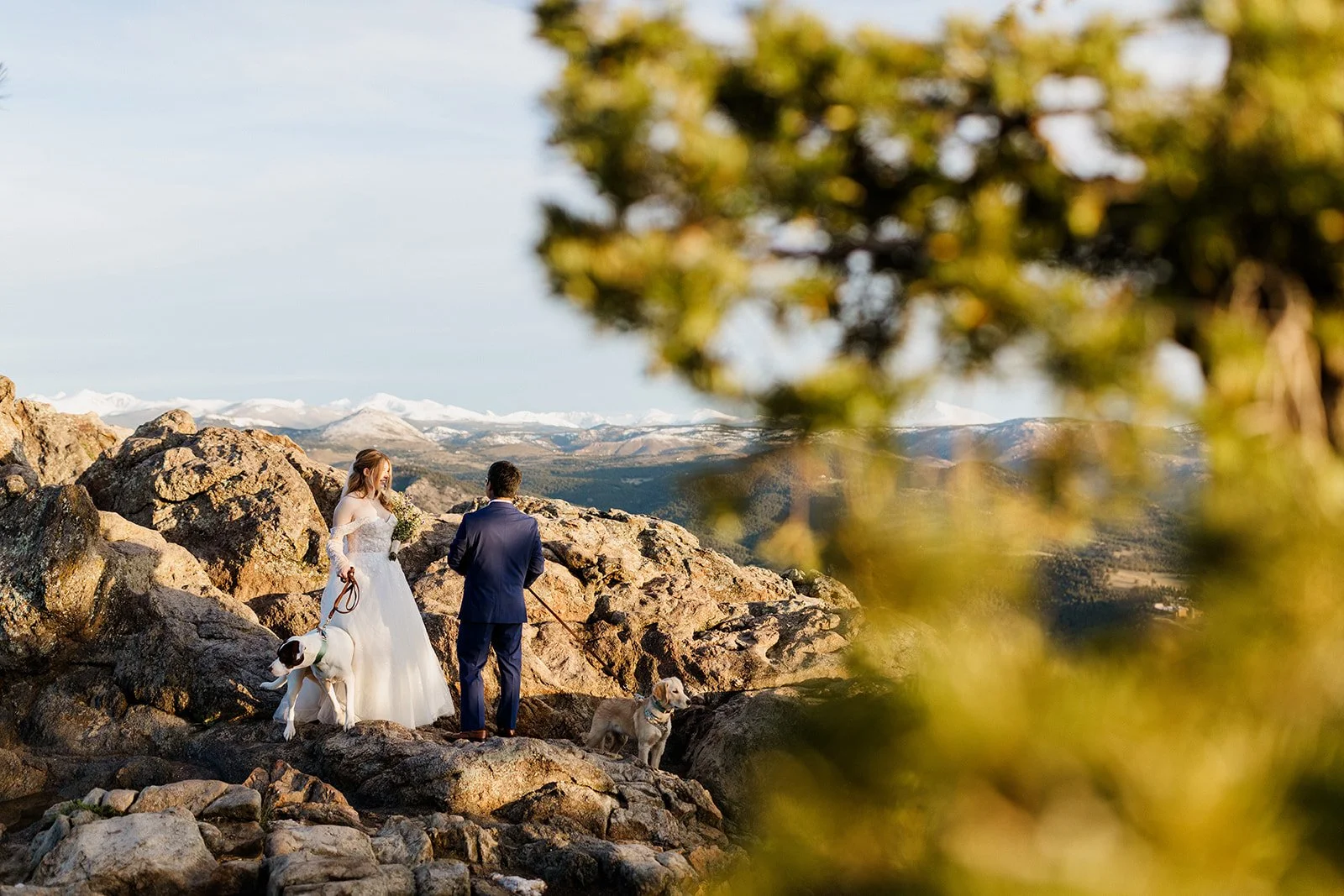
Lost Gulch Overlook
An overlook above Boulder with pine trees and mountain views. Same deal as Garden of the Gods: lower, busier, less snow. You will want microspikes, because getting out there means climbing up over rocks, and the little pockets in them fill with ice. Sunset is the popular time here, so if privacy matters more than warmth, sunrise is way quieter. There are also other spots nearby with the same views and fewer people, they just require a longer walk.
Closest airport: Denver (DEN), 53 minutes.
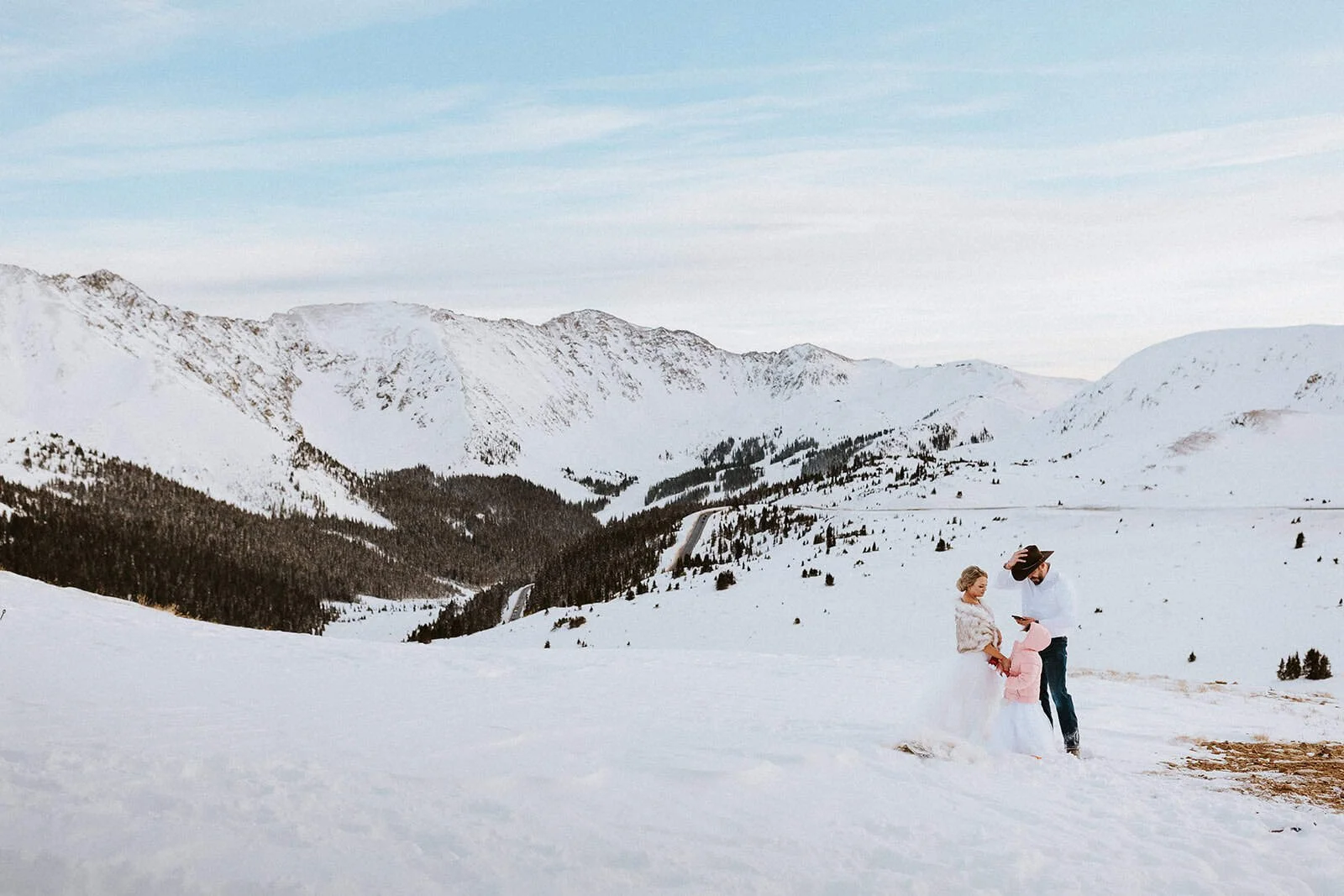
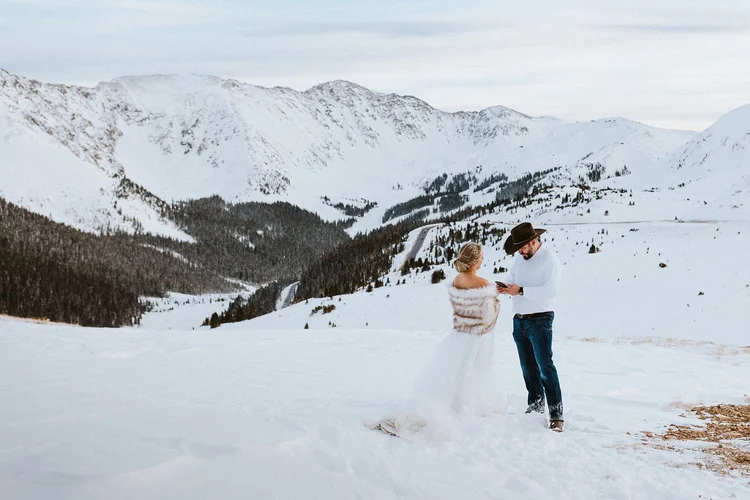
Loveland Pass
Loveland Pass is the hazmat detour on I-70. Trucks carrying hazardous material can't go through the tunnel, so they go over the pass, which means it only closes for serious emergencies. If there's fresh snow and it's safe to drive, you can still get up to almost 12,000 feet.
But it can be really windy. When it's really bad, it's realistically a five minutes outside of the car situation, because it is that much colder. If you walk about five minutes past the parking lot you can get some privacy.
Sunset is a great time to be up here. Just plan on heading west afterward, toward Breckenridge and Frisco, to avoid the ski traffic. Or be prepared to sit in it if it's a weekend or there was a big recent snow.
Closest towns: Silverthorne or Georgetown. Closest airport: Denver (DEN), 90 minutes.
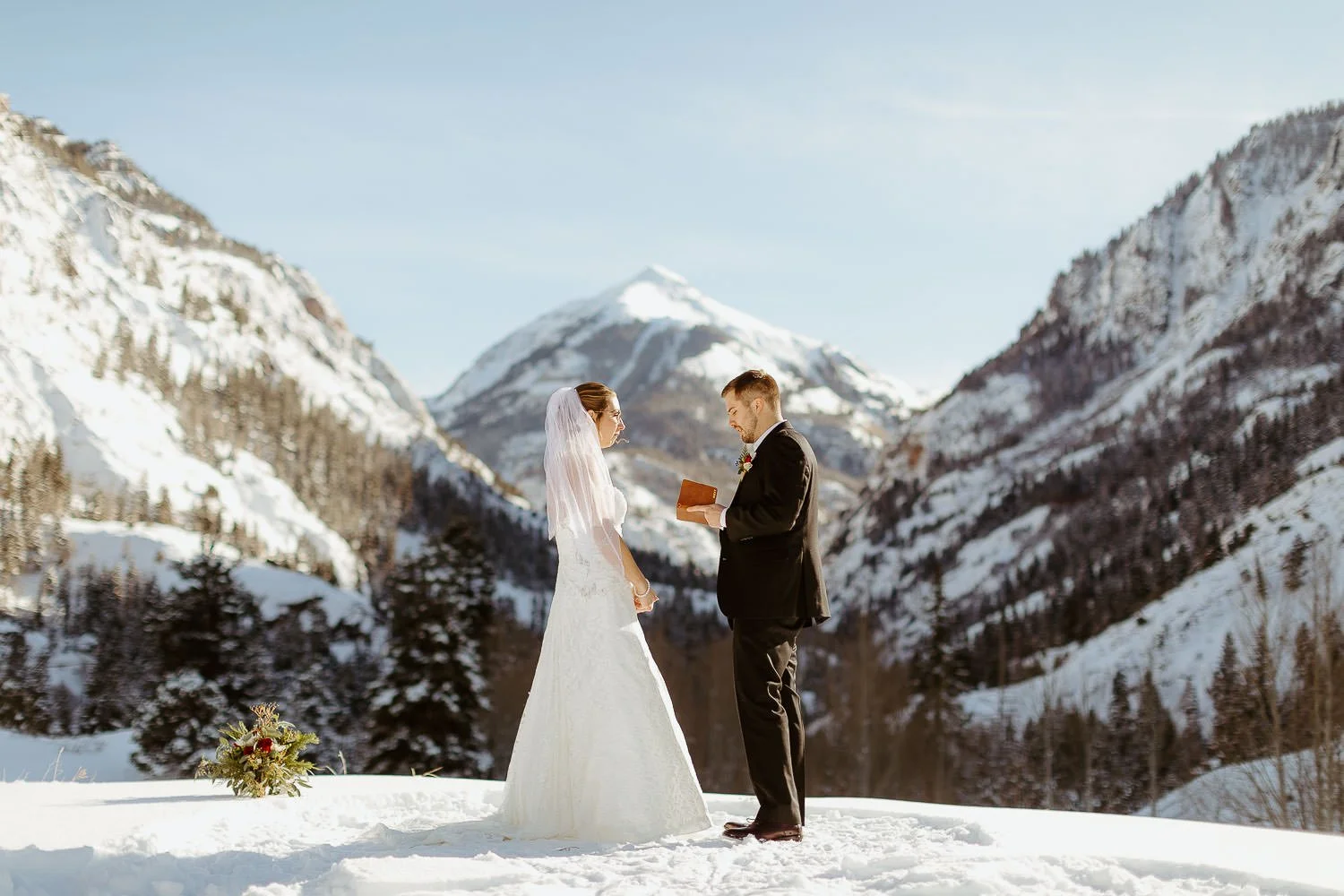
Here's what a winter elopement at Loveland Pass looks like when the wind behaves.
Mountain towns
Winter in the high country runs from about November to May, so this is where you go for snow capped peaks and snow on the pine trees. On a bluebird day (no clouds), the sun at altitude is strong enough that you'll feel warm standing in it, even with snow all around you.
The tradeoffs: it's colder and windier in certain spots, and the trees that drop their leaves are bare, so the woods have less to look at.
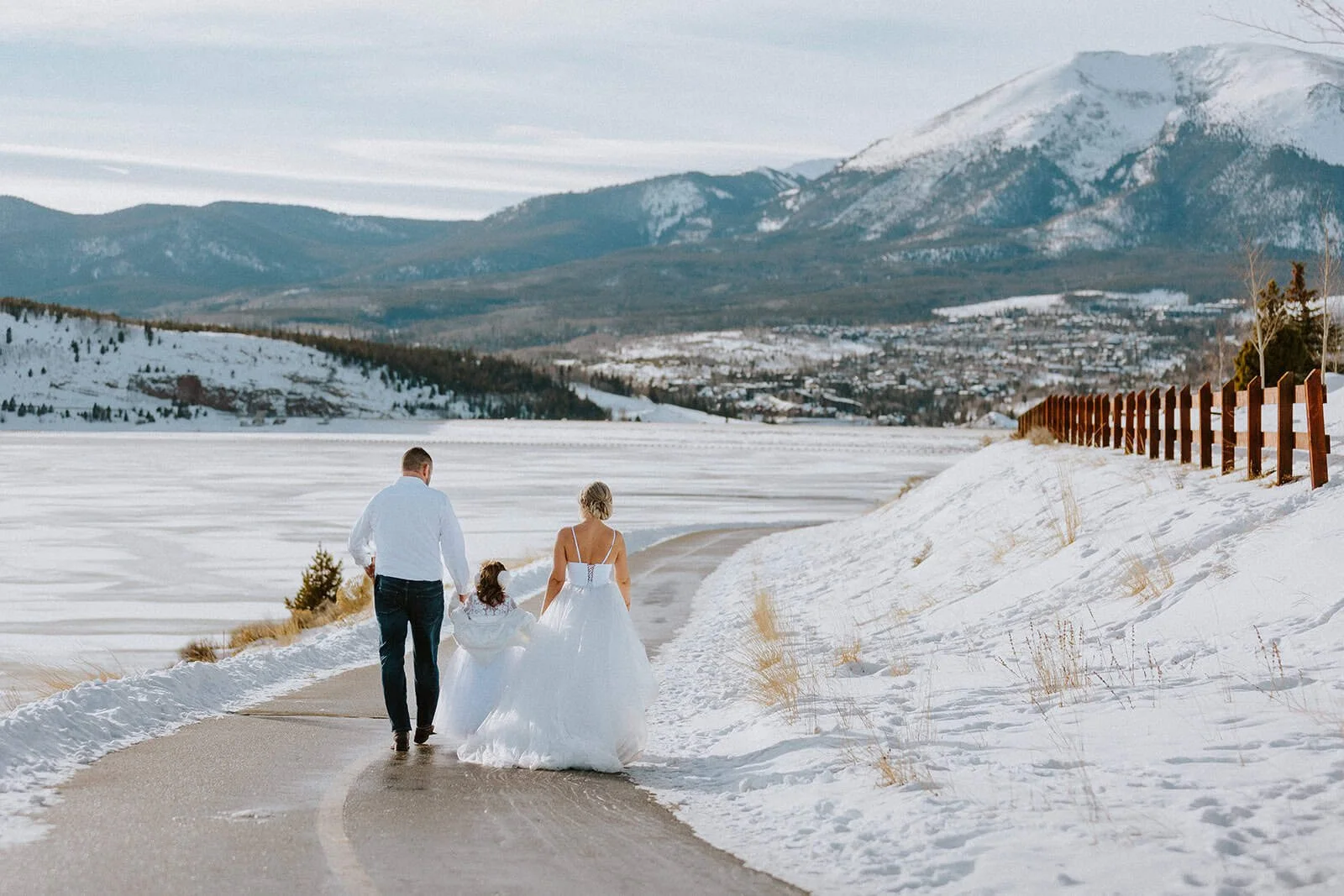
Breckenridge
Breckenridge is one of the top places I'd send you for a winter elopement. It's still really accessible in the winter, and because it's a ski resort town, a lot of restaurants stay open. Sapphire Point and Hoosier Pass are both close by.
There's also a lot to do that isn't skiing or snowboarding. You can take the BreckConnect gondola up to the base of the ski resort, and in and around town there's an ice skating rink, dog sledding, snowmobile tours, and a tubing hill in Frisco.
Getting there is the hard part. It's up I-70, so plan around ski traffic.
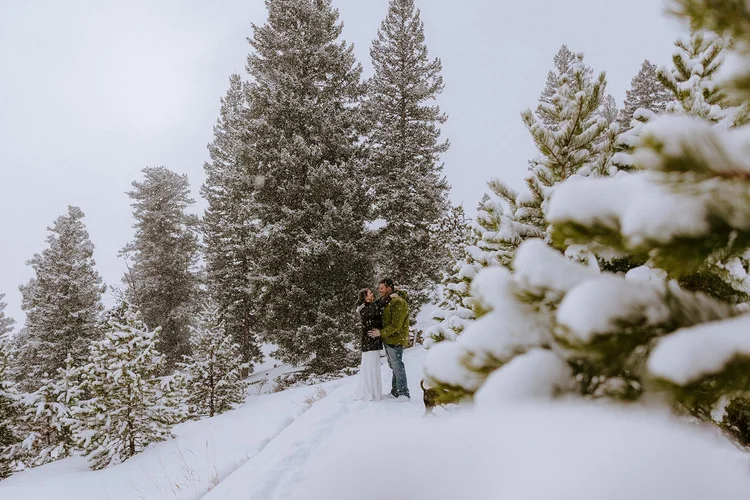
This winter elopement in Breckenridge is a good look at how much snow you can expect.
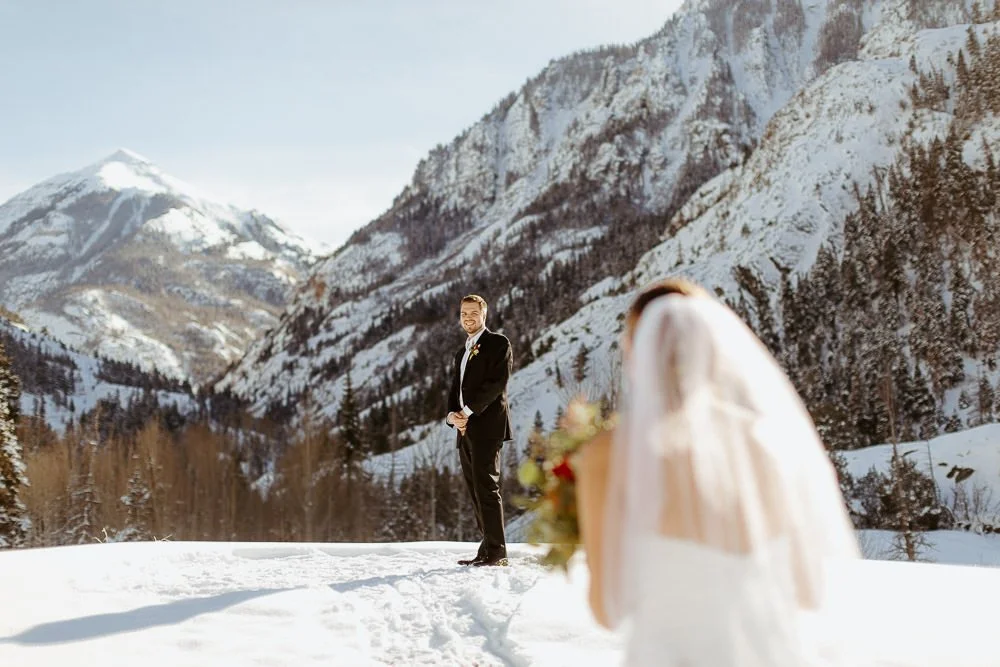
Ouray
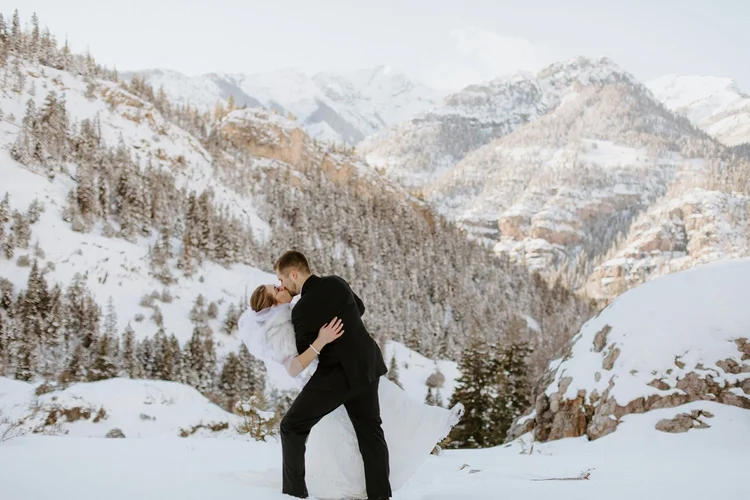
Ouray isn't a ski resort town, so it's quieter than Telluride or the Front Range resorts, and most restaurants stay open all winter. The trees around town are mostly pines, so you don't get a bunch of bare branches, and the mountains sit right on top of you. And there are hot springs, at 104 degrees.
The downside in Ouray is that a lot of the bigger views are up Red Mountain Pass. In winter that road can be unsafe with snow and ice, and it runs through a lot of avalanche terrain, so any plan up there needs a backup.
I photographed a winter elopement in Ouray and a small winter wedding at Hotel Imogene, if you want to see town with snow on it.
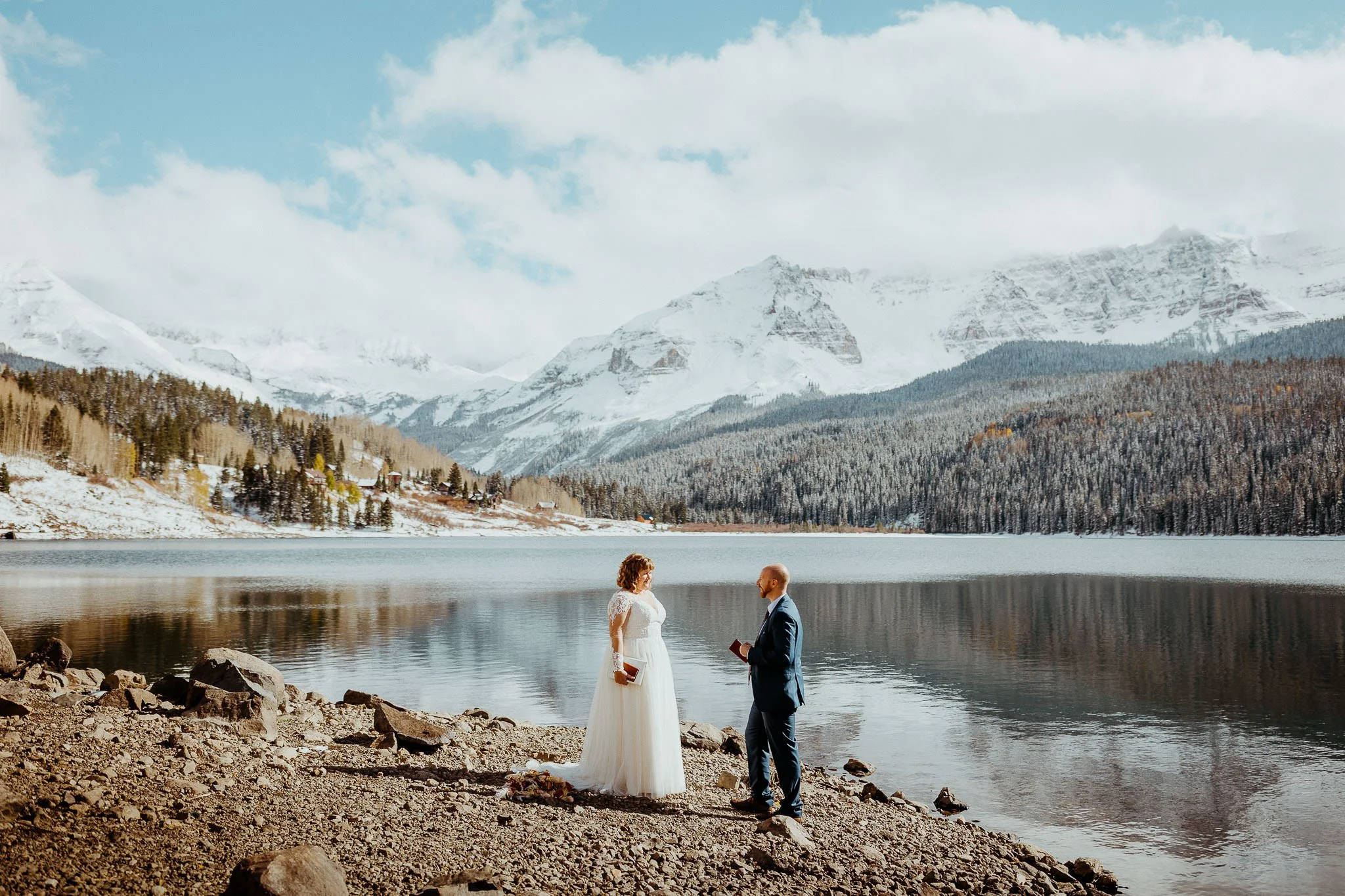
Telluride
Telluride is a ski resort town, so there's more going on than in nearby Ouray: more restaurants, more to do, and a free gondola during ski season that gets you views of the mountains and of town. The roads are also easier in winter because there aren't as many cliffs.
For photos, we'd head up. Town has more bare trees, and the pines and snowy peaks start once you gain some elevation. The passes are also where you'll find a quiet spot, because town gets busy.
The tradeoff is price. Telluride is VERY expensive during ski season.
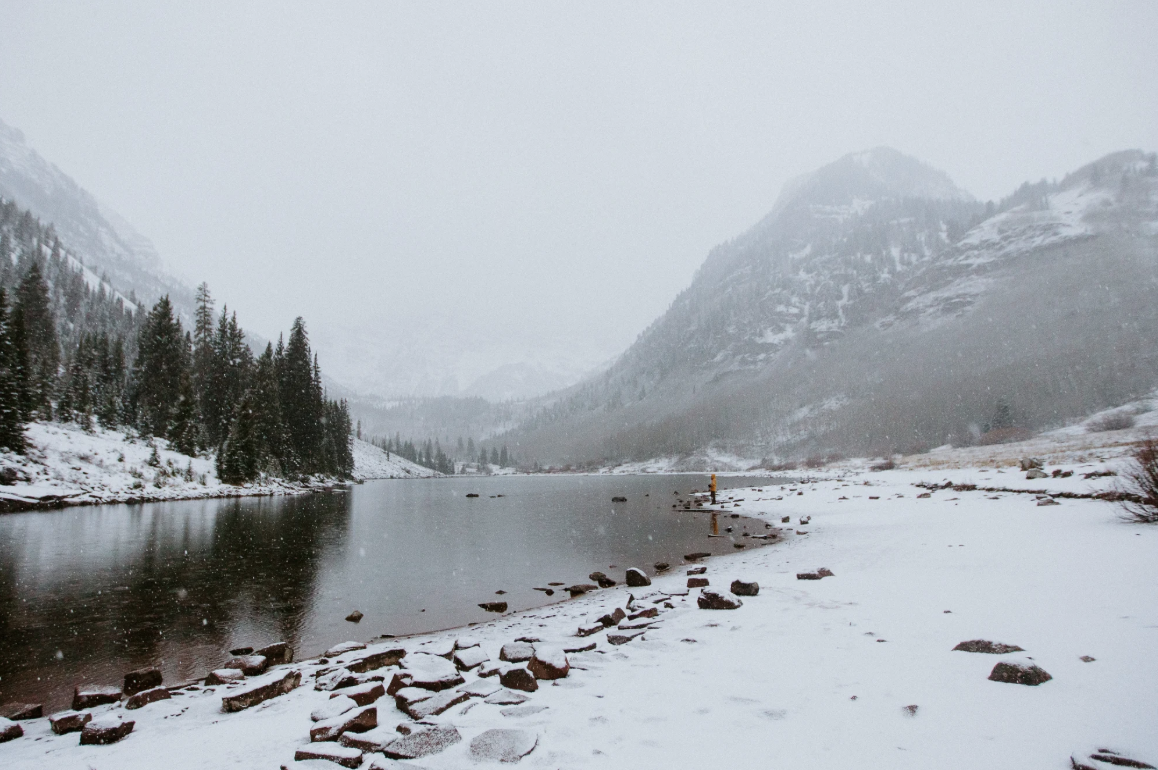
Aspen
Aspen is about half the drive from Denver that Ouray or Telluride is, and there are tons of restaurants and shops. Locations are very limited in winter, though. Independence Pass and the other high passes are closed October through June, so outside of the ski resort, getting to big views means snowmobiling into the backcountry, hiking 5 to 10 miles, or booking a snowcat or helicopter tour. All of that takes more money and more planning, and town is super expensive and busy during ski season.
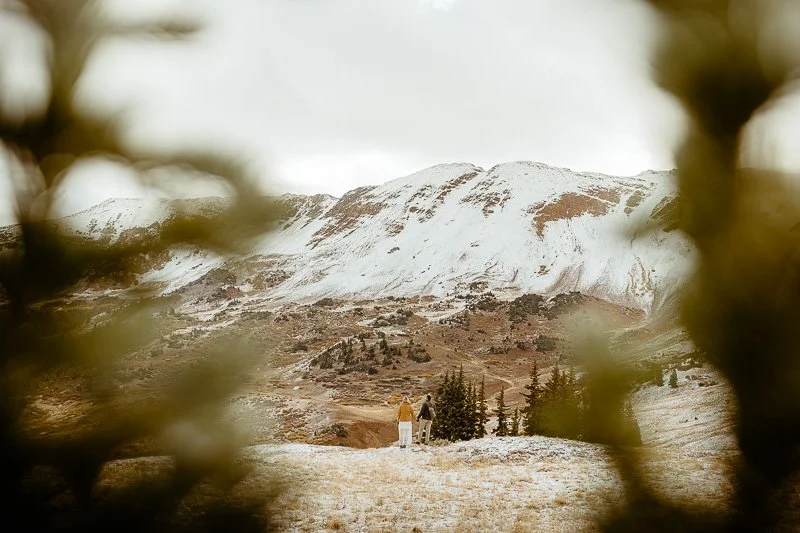
Crested Butte
Crested Butte is a ski town, so restaurants and shops stay open all season, and there are easy to reach spots right around town. Gunnison and Denver are the closest airports.
It's one of the coldest parts of Colorado (nearby Gunnison regularly breaks cold records). All of the scenic roads are closed, so getting farther out means renting snowmobiles and going miles into the backcountry.
The desert and farther out
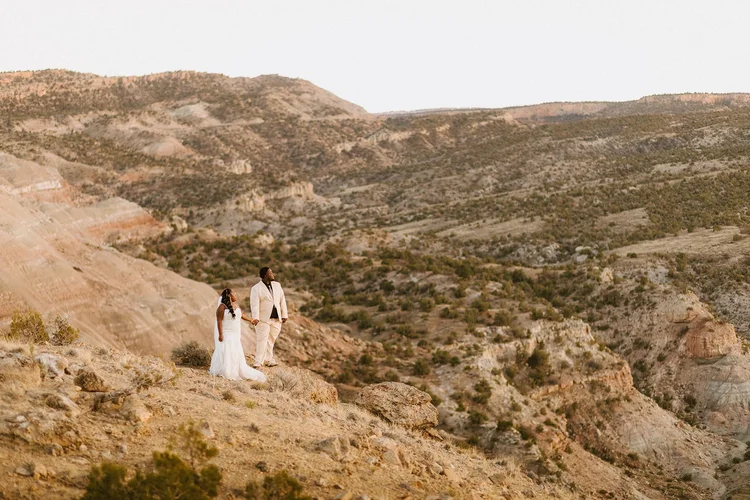
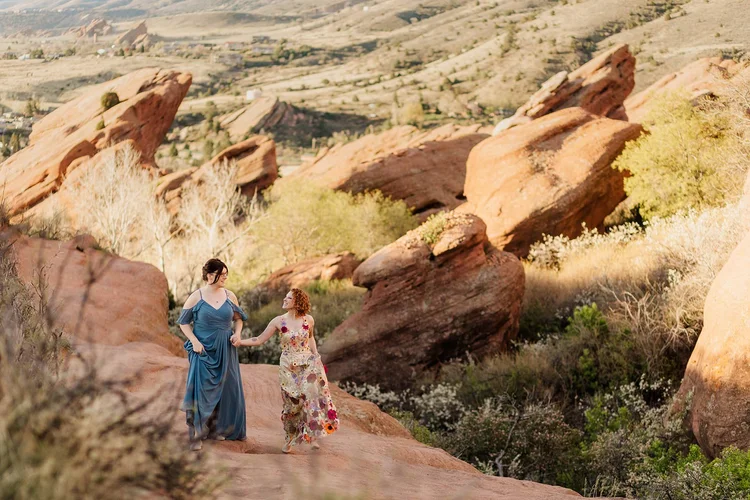
If you want to elope in the winter but don't want your photos to look like winter, the desert is a good option, because there's less likely to be snow. Lower elevation means warmer winters. It snows enough to stay on the ground maybe 10 to 15 times a winter, and it's there for a day or two before it melts off. The scenery is red sandstone and big mesas, and a lot of the desert plants keep their color all winter. Same off season discounts on places to stay.
The tradeoffs: inversions make it cloudy more often, and some spots get muddy.
Grand Junction
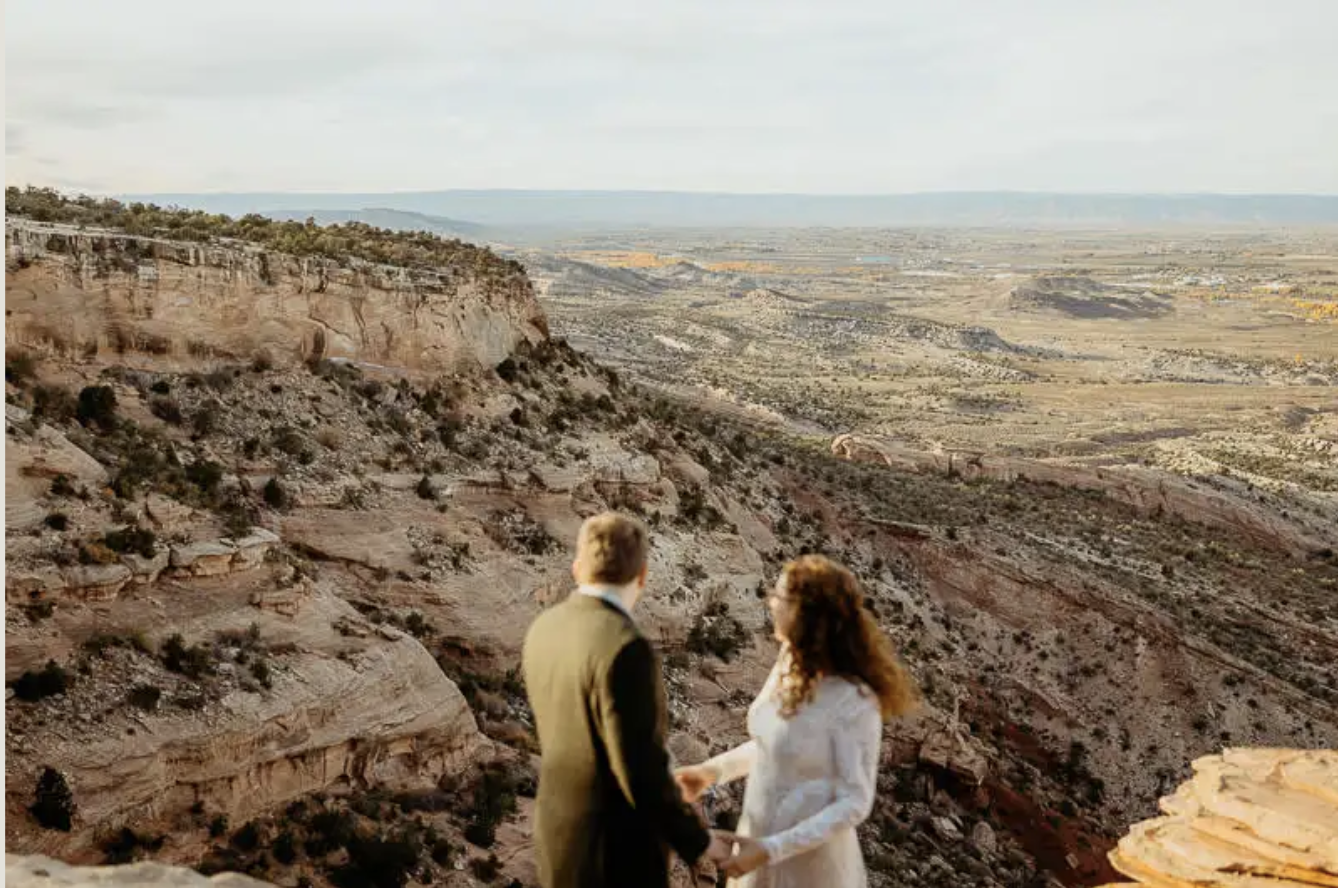
Grand Junction is warmer and nothing closes for winter. You can spend the morning in the desert and the afternoon in the snow on top of the Grand Mesa, then go wine tasting in Palisade or drive through the National Monument.
Locals use the trails all year, so they're busy, especially on weekends. It gets muddy in early winter and again in March when the ground thaws. It's also overcast a lot, though sometimes that means a cloud inversion, which is cool to see.
Moab
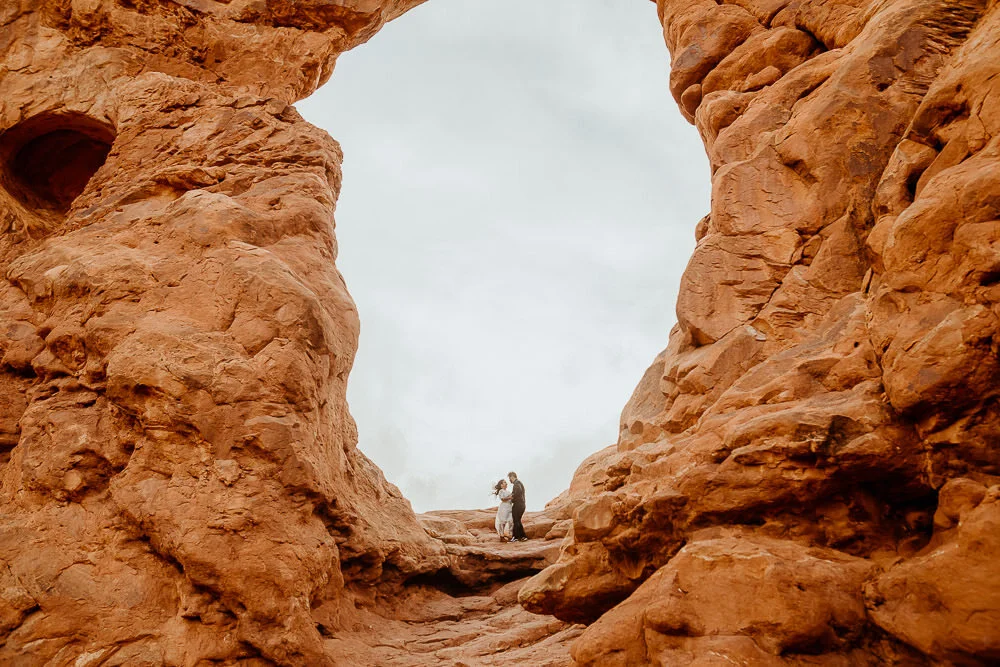
Winter is arguably the best time to go to Moab. The national parks are way less busy, you don't need a timed entry reservation, it's warmer than the mountains, and the roads stay open.
Same catches as Grand Junction: busy trails on weekends, the same mud season (bad enough to make 4WD roads impassable), and a lot of overcast days. Some parts of Moab get windy, and only some restaurants stay open.
Great Sand Dunes National Park
The tallest sand dunes in North America, with the Sangre de Cristo Mountains behind them. I haven't shot here with snow on the ground, only when it's cold, so I can't tell you what that looks like yet. What I can tell you: you need a permit to exchange vows, it's a decent walk from the car if you want to get up on the dunes, and the dune field is so big that it's easy to get away from other people.
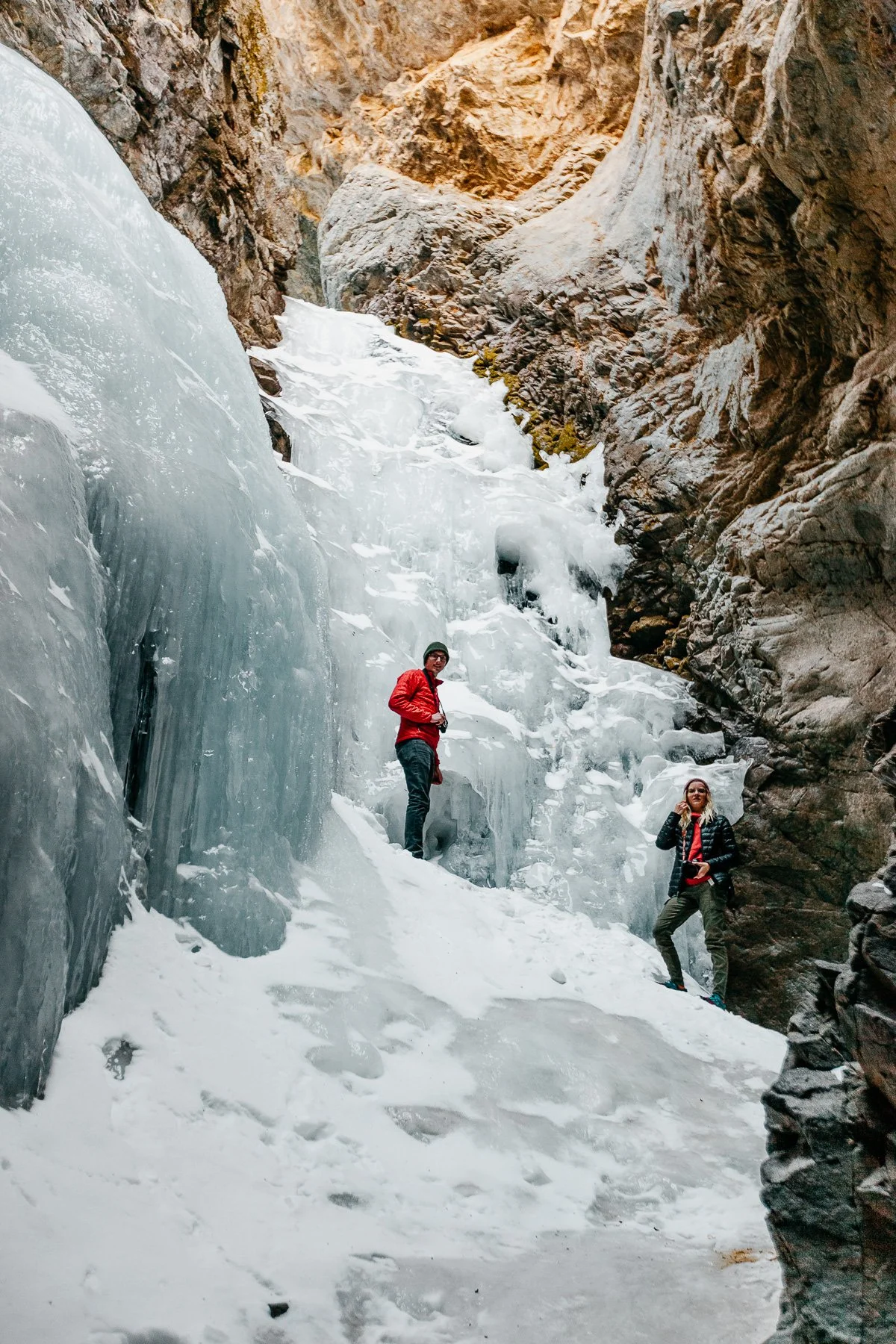
If you want to pair it with a hot spring, Joyful Journey is the one to stay at. Mount Princeton in Buena Vista works too, but it's a pretty long drive from there to the dunes. Either way you can soak in the morning, stop at frozen Zapata Falls, and then head to the park.
Closest large towns: Alamosa, Salida. Closest airports: Gunnison (GUC), 2 hours 18 minutes. Colorado Springs (COS), 2 hours 32 minutes.
Where to stay for a winter elopement
Nothing feels more Colorado to me than a wood cabin with a fireplace, and it makes a great home base for a winter elopement. We use cabins for getting ready and for photos of the two of you making breakfast or hanging out in the hot tub. A lot of the time the cabin is also the backup plan if your main spot closes because of weather. And sometimes it's the ceremony spot, because a lot of cabins out here have really scenic views.
When you're booking one, look for big windows (natural light matters if we're taking photos inside). A fireplace is always cute, and hot tubs are fun. Then check two things. One, that weddings are allowed, if you plan on doing anything at your Airbnb or want it as your backup. Two, whether you need four wheel drive to get to it. In winter a lot of places require it or at least recommend it.
I love the A-Frame Club in Winter Park for this.
The Mestaa'ėhehe Mountain Fire Lookout is another one I keep going back to. I've stayed there a bunch of times, including in the middle of winter when it's covered in snow, and once with a couple when it snowed on us briefly. You get a 360 degree view. It's cold up there, but they have heaters. You do have to hike in. From the winter parking area, AllTrails lists it at 4.1 miles with 872 feet of gain, about 2 to 2.5 hours. In summer the walk is a little shorter.
A few other cabins, huts, and yurts worth looking at:
Opus Hut (ski in only in winter. It's a 3.5 mile trip on skis, and snowmobiles aren't allowed.)
A lot of backcountry huts are ski in or snowshoe in during winter, so check how you get there before you book.
Getting around Colorado in the winter
Rent something with 4WD, and check the tire tread before you drive off the lot. It has to pass the I-70 traction law.
I-70 is the big one. It crosses the most passes and carries all the ski traffic, so it's pretty much always bad in the winter, especially at Floyd Hill. If you're coming up from Denver, head up early and find a coffee shop or go out to eat until it's time. The other highways are normal winter roads. Be careful on them, and make sure they're open before you go.
Ski traffic is its own thing, and it's all winter. People sit on I-70 for five hours on a drive that should take an hour and a half. Don't do that. We'll plan around it.
If your spot is more than about an hour from Denver, I'd stay local instead of driving up that day.
You can check road conditions with CDOT, but honestly, I'll be keeping you up to date more than anything. On the day, you either follow me in your car or I hop in with you.
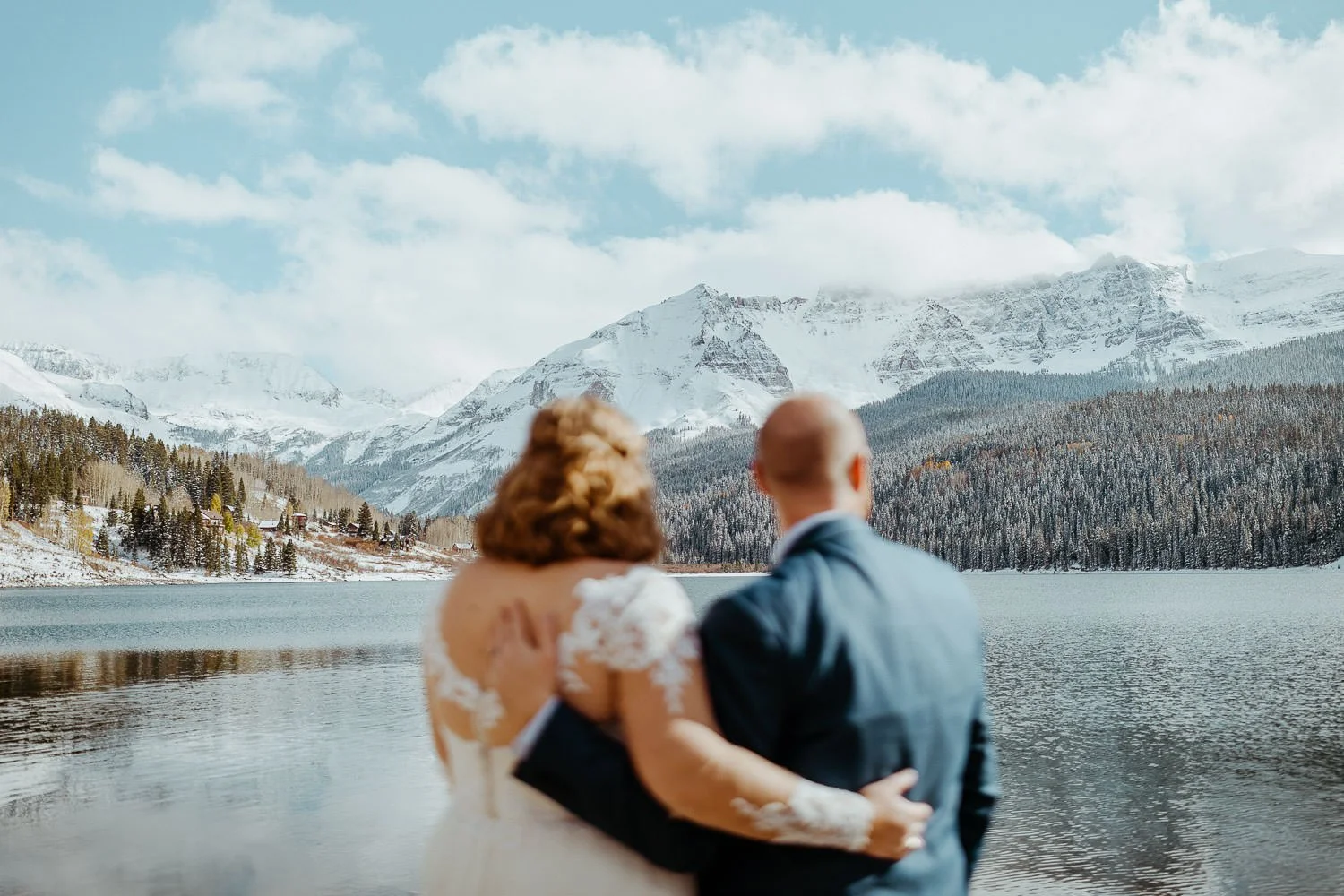
Permits and your marriage license
Nothing about permits changes in the winter. Any place that requires one in the summer requires one in the winter too. Rocky Mountain National Park and Great Sand Dunes both do. Lost Gulch is Boulder open space, so I need a photographer permit there, and you'll want to confirm with Boulder OSMP whether you need one as a couple eloping.
The marriage license is the same all year too. Colorado lets you marry yourselves, with no officiant and no witnesses, and you can get your license from any county clerk. The full steps are in my guide to how to elope in Colorado.
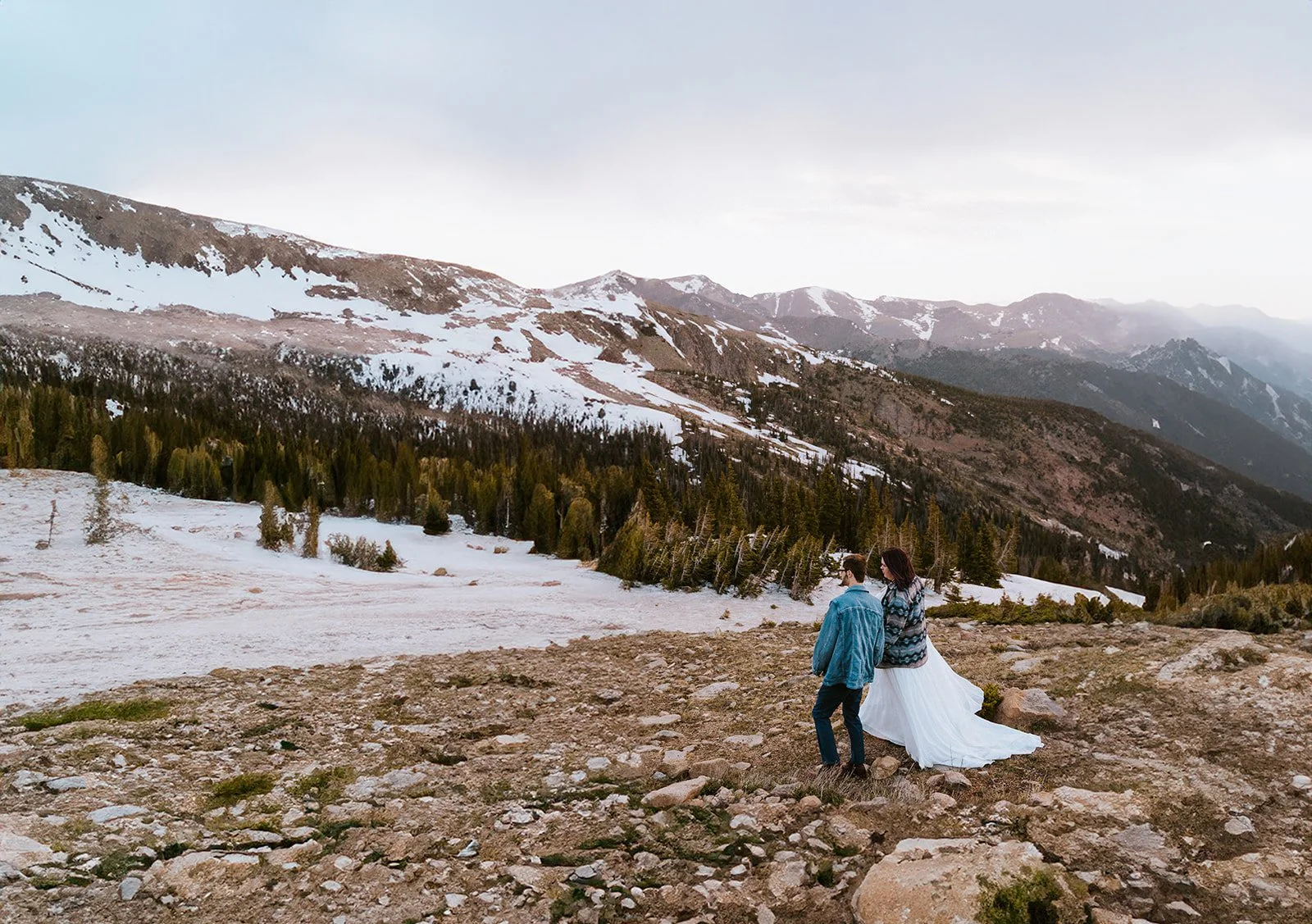
What to wear for a winter elopement
Under your clothes
Skin colored fleece lined leggings under a dress. Base layers under a suit. Wool socks for everybody (I really like Darn Tough). None of it shows in photos and all of it matters.
Shoes
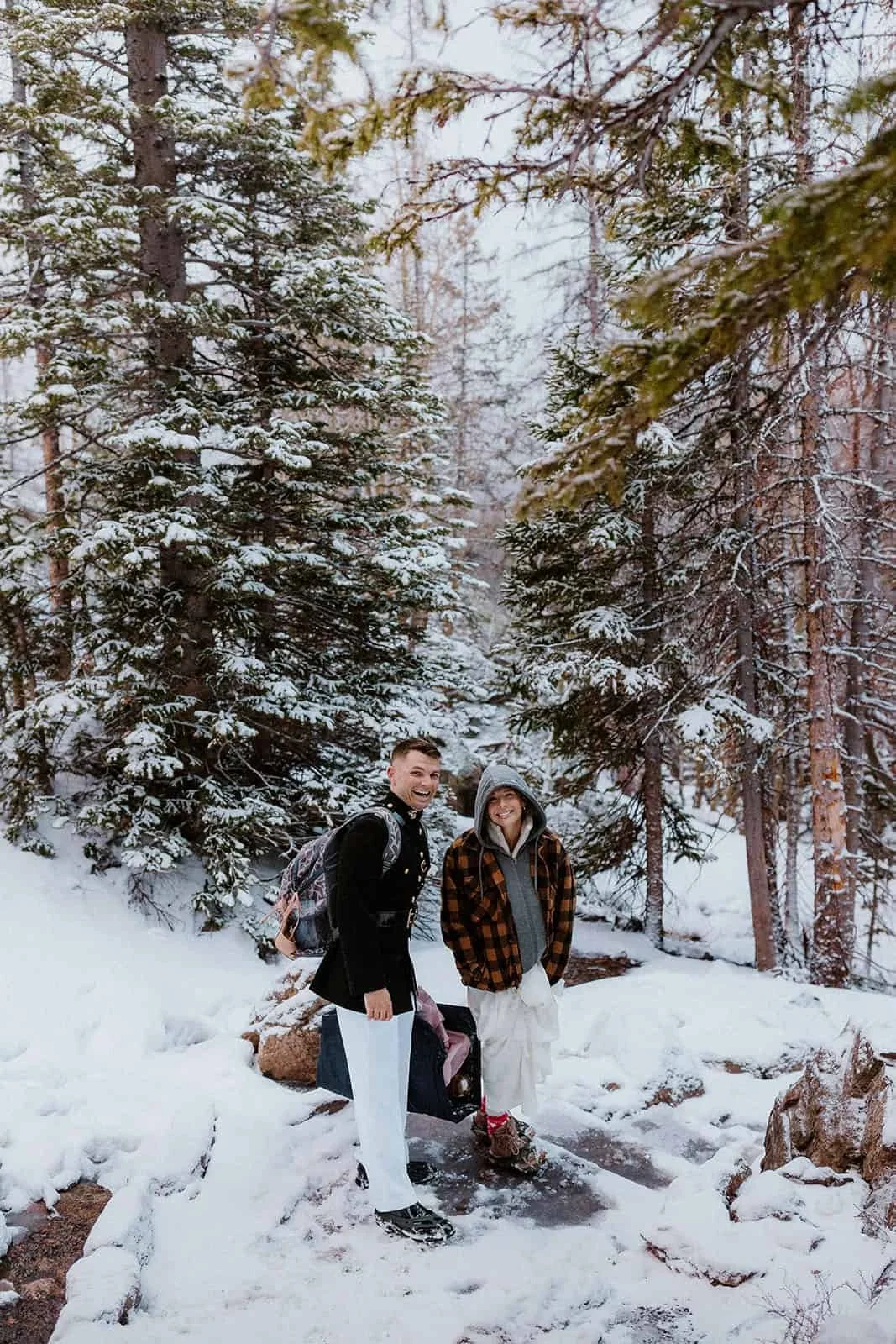
Waterproof shoes are SO important, because you will get snow on them. Tall boots are even better, because otherwise the snow ends up inside your shoes. If you're in dress shoes, make sure they have traction on the bottom.
Get a cute coat
We'll usually walk to the spot with your coat on. From there we can take photos in it, or some people choose to take it off. You can find the cutest coats at thrift stores, like a faux fur wrap or a white wool coat for $10, and it makes such a difference in how the cold feels.
If you don't have a coat you're okay being photographed in, I promise you're going to get cold. You'll spend 20 minutes warming up in the car, you'll never feel warm enough to want to get back out, and then you're just having a miserable time. Nobody wants that. If you can't find a coat you like, I can bring some of mine.
Hair and makeup
Wind and a red nose are the two things to plan for in winter. Bring your makeup with you so you can touch up your nose. For the wind, I usually recommend wearing your hair up or half up. If you'd rather wear it down, just be okay with it blowing around.
What I bring
Hand warmers (I buy the Costco pack so we never run out), blankets, gloves, microspikes, and a way to make something warm, like tea or coffee.
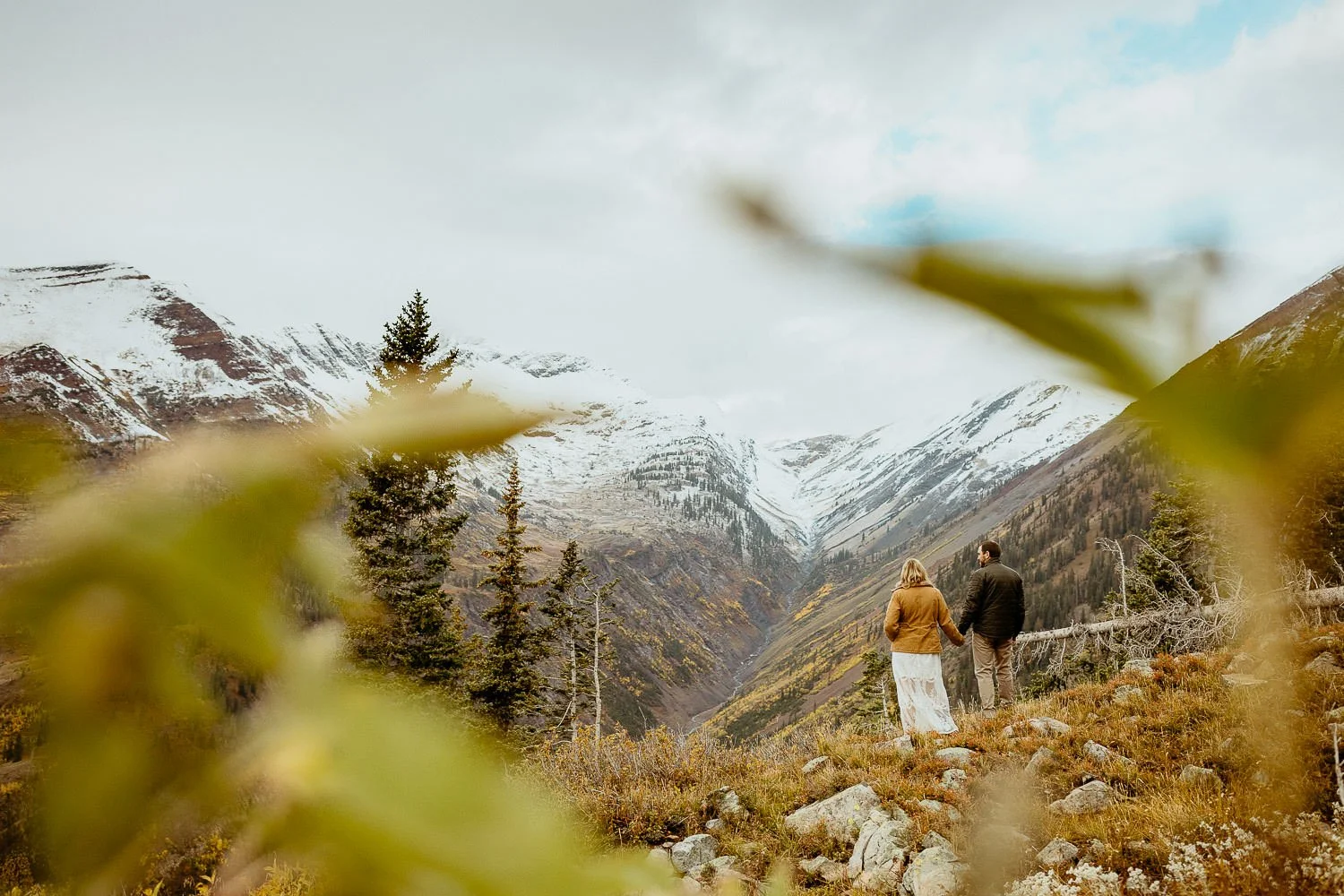
What to do on a winter elopement day
Things you can do on the day besides the ceremony:
Get ready at the Airbnb in front of the fireplace
Take the gondola up in Telluride
Grab warm food and a warm drink
Snowshoe
Soak in a hot spring
Book a snowcat tour
Have a private chef come cook at the Airbnb
Hot springs
You can't take photos at the public hot spring resorts like Strawberry Park, Mount Princeton in Buena Vista, or Hot Sulphur Springs, so those are for soaking before or after. If you want photos in a hot spring, I know a few undeveloped ones we can go to.
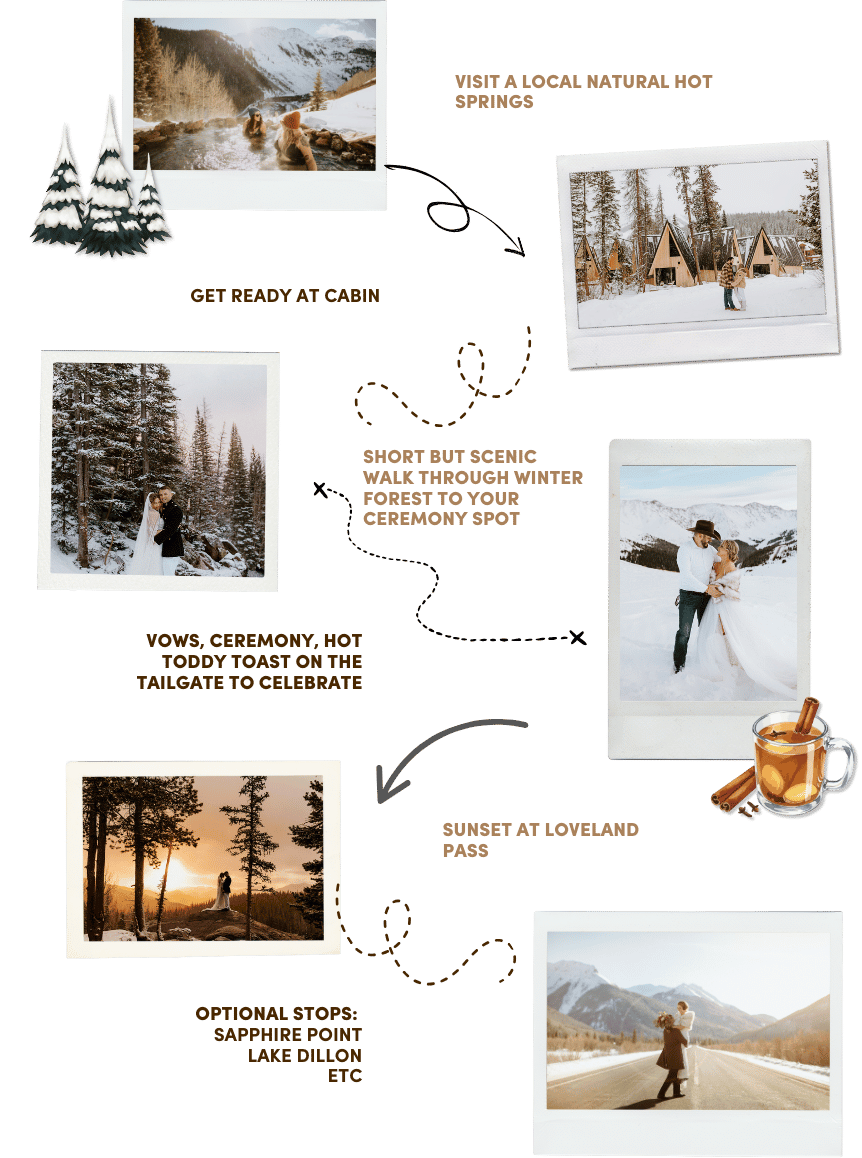
A sample winter timeline
Winter sunsets land somewhere between 4:30 and 6pm depending on the month. If you pick sunset for your ceremony or photos, that's usually when we wrap, so you're done by dinner. Here's what a December day could look like:
10:00 Soak at an undeveloped hot spring
12:00 Coffee, breakfast, and getting ready
1:45 Drive up Red Mountain Pass
2:15 Vows and photos in a pine forest
3:15 Back to the car to warm up. Tea, hand warmers, and toasts
3:45 Sunset at overlook in Ouray
5:00 Back to the cabin for the private chef & mandatory hot tub warm up
More timeline examples here.
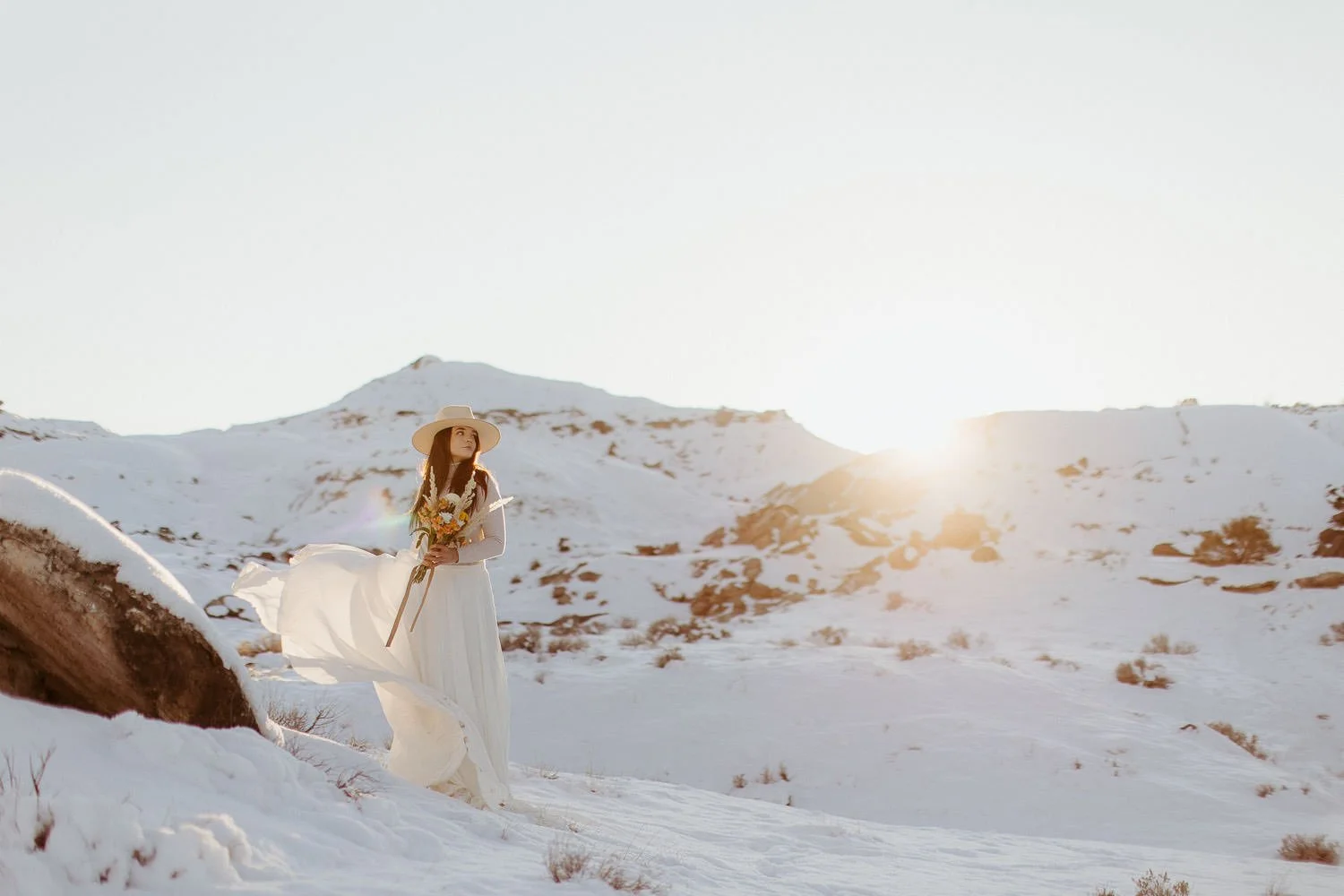
How many guests can you bring in the winter?
Keep it to 15 or fewer in winter. Everyone needs to be okay with the cold and wind, and everyone needs the right shoes. If you'd rather have a bigger group, a small venue is the safer bet.
What to tell your guests
Be prepared for the cold. That means dressing warm, wearing shoes with traction, having microspikes if we're going anywhere with snow, and bringing warm drinks. I also have a guest guide I send that helps them get ready, so you don't have to explain all of this yourself.
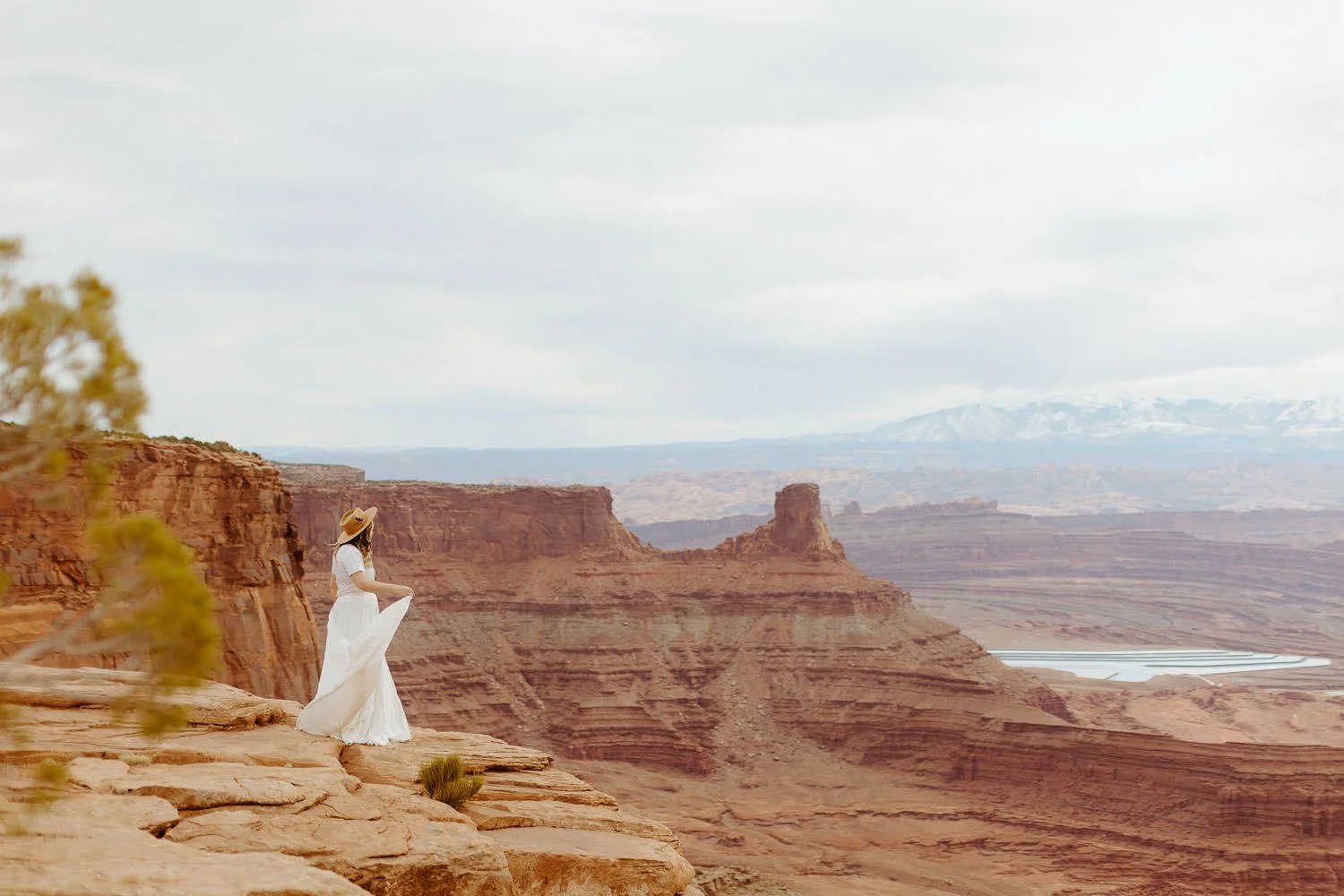
Winter elopement checklist
A few months out
Pick your location and date, and book extra days on both sides of it
Check for wedding permits and entry permits
Book your photographer and any other vendors (video, hair and makeup)
Book your cabin or Airbnb. Ask if weddings are allowed and whether you need four wheel drive to get to it.
Book your tours ahead. Snowmobile, snowcat, any of them.
Reserve a rental car with 4WD. I always recommend it, just in case there's heavy snow wherever you end up. When you pick it up, check the tire tread.
Find your coat
Start writing your vows
Pick up your marriage license
To pack
Your jacket. People forget it, or they think they won't need it. I swear it happens every time.
Gloves, and a warm hat or cute earmuffs
Fleece lined leggings, base layers, wool socks
Waterproof boots and microspikes
Sunglasses, because the snow is bright AF
Sunscreen, for all the light reflecting off the snow
Chapstick and lotion. Must haves.
A thermos, and soup to put in it
Water (duh) and snacks
Rings, vow books, marriage license, and any permits
Makeup for touch ups
Day of
Take your clothes out of their bags
Set aside the details you want photographed (rings, vow books, shoes)
Tidy up the room you're getting ready in
Eat something and drink plenty of water

Questions I get about winter elopements
How cold is it going to be?
It depends. That's my answer every time a couple asks. It can be 70 degrees and t shirt weather in February, or it can be negative 10 with wind chill, or a blizzard with three feet of snow on the way. So prepare for the worst and hope for the best.
What happens if there's a storm on our day?
We start looking at the following day and what our options are there. That's why I keep it open.
What about avalanche risk?
I don't take people to places with avalanche risk. A lot of those spots are hikes anyway. On the roads that cross avalanche terrain, there are signs telling you not to stop, and we don't.
Do we have to hike in the snow?
No. If you want a short one, Dream Lake is a good option.
Can our dog come?
Absolutely. Find and test some kind of dog booties or musher's wax ahead of time, because snow gets packed down and icy in spots and it's hard on their paws. The one exception on this page is Rocky Mountain National Park, where dogs have to stay on roads and in parking areas.
Is a winter elopement cheaper?
No. My pricing is the same, because I'm planning for the same things plus weather and rescheduling. Where you can save is on a place to stay, as long as it isn't a ski town.
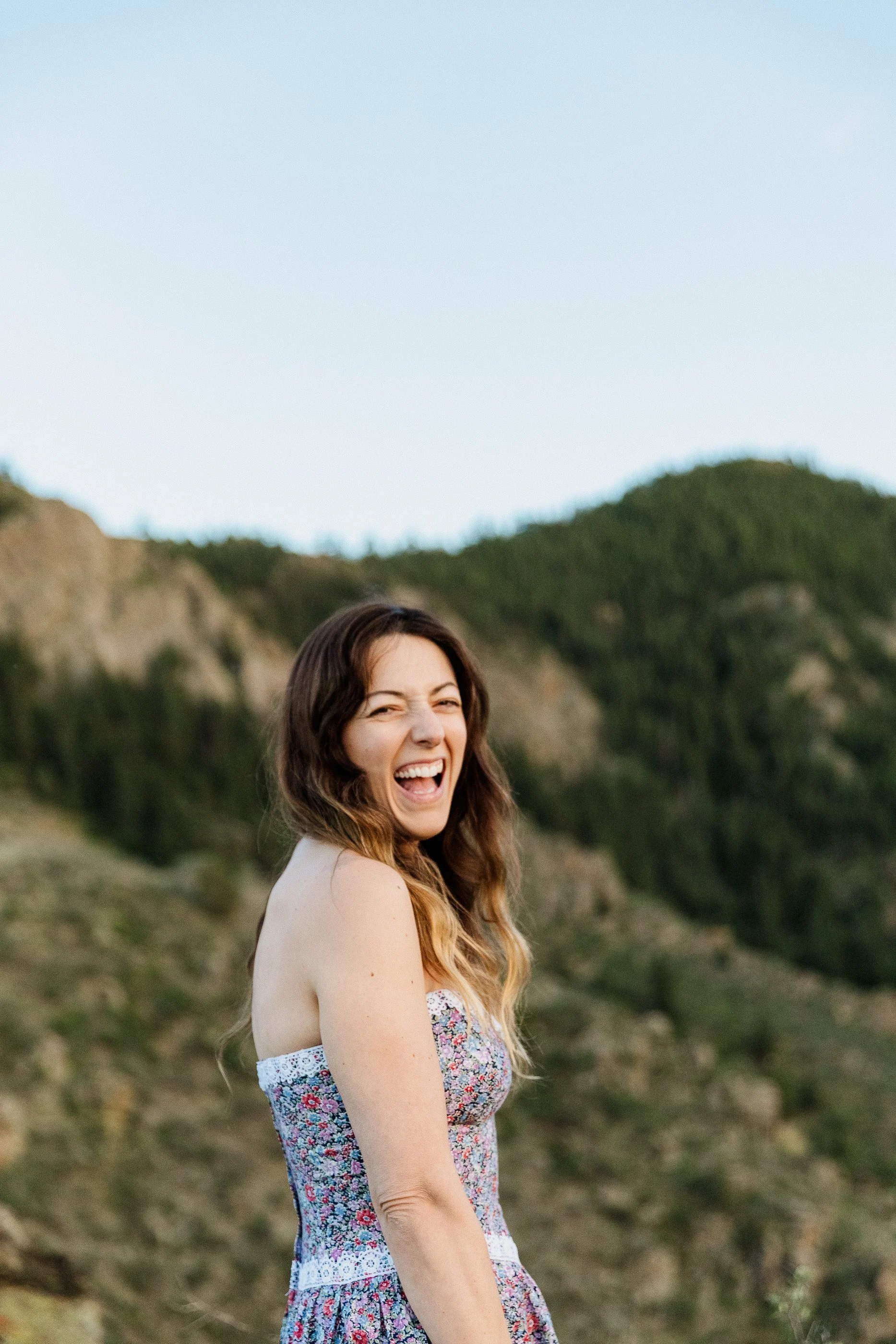
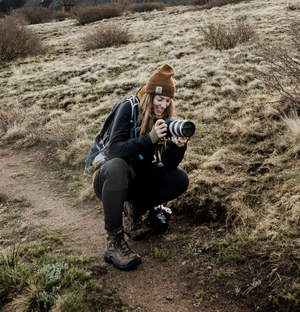
Hi, I'm Kimberly!
I'm a Colorado elopement photographer based in Denver (clearly not dressed for the winter in this photo). I'm usually somewhere in the mountains with a camera and way too many things in my backpack "just in case."
I've been photographing elopements out here for 10 years and 100+ couples, so most of what I write about here comes from actually doing it.
You can learn more about me here, or if you're planning your own elopement, start with pricing & experience.

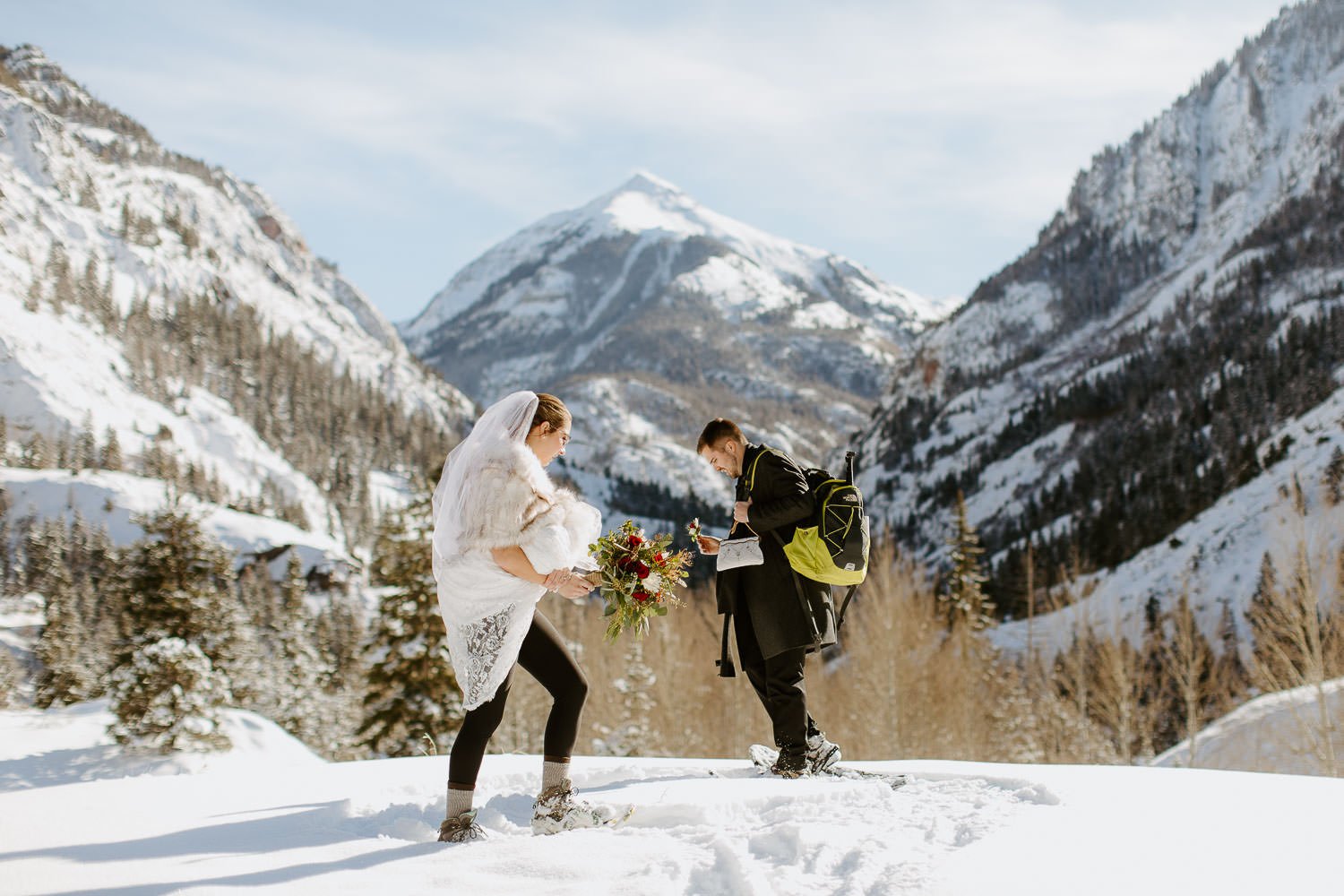


How to elope in Moab without busting the crust: permits for Arches, Canyonlands, and Dead Horse Point, BLM land, timelines, hikes, campgrounds, and food.